Small Home Movie Theater: Ideas & Projector Setup Guide
April 9, 2026
Sometimes, we think a small, empty room is just dead space. But with a little creativity, you can transform that typical, boring room into an incredible small home movie theater. You can achieve this simply by controlling light, audio, and visuals.
You can easily adapt the compact home theater setup ideas in this guide to fit your room's size. All you need to do is let your personality shine. A large, expensive theater without personal touches can feel sterile, but a customized space tailored to your tastes will always impress.
Why You Don’t Need a Mansion for a Cinematic Experience
The myth that you need a massive estate to enjoy cinema at home simply isn't true. Achieving a 100-inch+ cinematic screen is entirely possible in a spare bedroom, an apartment living room, or a tight basement.
To fully utilize your current space and make it aesthetically pleasing, you need to learn space-saving layout hacks, acoustic solutions, and the specific features to look for in a compact projector. For very tight spaces where you can't center the projector on the screen, you can place a modern laser projector at an angle to get the perfect picture.
Top Small Home Movie Theater Ideas for Tight Spaces
Maximize your available footprint by making strategic choices in your layout, acoustics, and lighting. You can create a highly immersive environment that never feels cramped.
Smart Room Layout and Creative Seating
To maximize the viewing distance from your screen:
- Use low-profile seating furniture.
- Incorporate modular sectionals or tiered platforms (if vertical space allows).
These strategies optimize viewing angles without eating up valuable floor space.
Acoustic Treatments for Apartments and Bedrooms
In a compact home theater, sound bounces around quickly, causing harsh echoes. Try these solutions:
- Install aesthetic, space-saving acoustic panels.
- Hang thick blackout curtains.
- Use rugs to absorb sound on hard floors.
If you can’t mount acoustic panels where the sound hits the wall first, placing a rug on the floor works exceptionally well. These treatments absorb sound without requiring heavy, space-consuming construction.
Lighting Control and Paint Choices
The wrong wall color reflects light, creating a bright environment that ruins the theater feel. We recommend:
- Controlling or eliminating unnecessary light sources.
- Using dark, matte paint for walls.
- Installing smart blackout blinds.
This creates a true theater environment and drastically reduces screen glare.
10 Creative Setup Ideas for Your Small Room
Designing a small room projector setup depends entirely on your budget and personal style. Here are 10 versatile budget home theater ideas to inspire your project:
1. Gaming & Movie Room
Synced smart lights react to gameplay. This setup works perfectly as both a gaming room and a home theater.
- Best for: Gamers who are also cinephiles.
- Needs: Synchronized LED panels, glowing peripherals, and ergonomic seating.
- Cost: Low–Medium.
2. Starlight Projection
Project stars or galaxies on the ceiling. Keep the brightness low so it doesn't compete with the movie screen.
- Best for: Creating an open-sky, outdoor theater vibe indoors, which helps alleviate the confined feeling of a small space.
- Needs: Starlight projector.
- Cost: Low.
3. Snack Bar Theater
Blend the snack station with your wall color and place it away from the screen to avoid distractions.
- Best for: Convenience and hosting movie nights.
- Needs: Slim shelf, mini-fridge, and a compact countertop.
- Cost: Medium.
4. Art Gallery Theater
Displaying art makes the room mesmerizing. Use non-reflective glass to avoid glare from the projector.
- Best for: Showcasing personal taste and art collections.
- Needs: Framed art and floating shelves.
- Cost: Low–High.
5. Basement Setup
Build out the walls, paint them dark, and ensure proper ventilation for a dedicated cinema feel. Explore more basement home theater ideas to elevate this space.
- Best for: Repurposing an unused basement.
- Needs: Construction materials, acoustic panels, and dark matte paint.
- Cost: Medium–High.
6. Multi-Purpose Room
Use easily movable seating to quickly clear the floor space when you aren't watching movies. A projector is an absolute lifesaver for small apartments in this setup—when turned off, it takes up zero space, unlike a massive black TV screen that ruins your wall's aesthetic.
- Best for: Using the room for other daily activities.
- Needs: Lightweight furniture, floor cushions, and poufs.
- Cost: Low–Medium.
7. Cozy Bedroom Setup
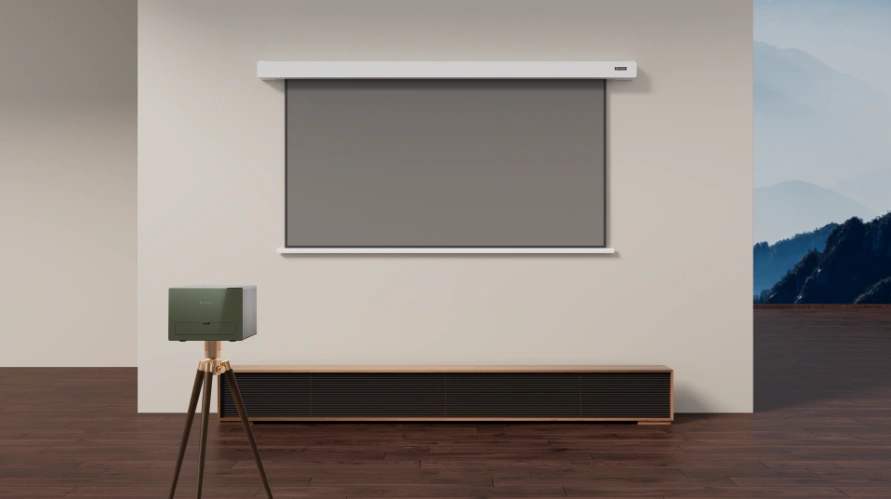
Mount your projector to the ceiling for a minimalist setup that's great for movies or gaming in bed.
- Best for: Late-night movie lovers.
- Needs: Ceiling or bedside projector mount.
- Cost: Low–Medium.
8. Relaxation Room
Treat yourself and your guests to a spa-like relaxation experience during a movie marathon.
- Best for: Ultimate comfort while watching.
- Needs: Massage chair or ergonomic recliners.
- Cost: Medium–High.
9. Ambient Light Theater
Ensure ambient light does not reduce image quality by investing in an Ambient Light Rejecting (ALR) screen.
- Best for: Adding a stylized, modern aesthetic.
- Needs: High-quality LED strips and an ALR screen.
- Cost: Low.
10. Library Theater
Avoid reflective paint on the shelves, as large book collections can scatter ambient light and create glare.
- Best for: Combining a personal library with a cinema.
- Needs: Bookshelves.
- Cost: Low–Medium.
Choosing the Right Projector for Your Setup
When dealing with limited square footage, standard projectors won’t cut it. You need a device specifically engineered to deliver a massive image from a short distance while remaining unobtrusive.
- The Magic of Throw Ratio and Optical Zoom: The throw ratio dictates the screen size in your small home movie theater. It is the distance from the projector to the screen, divided by the screen's width. For example, if the throw ratio is 1.5:1, the projector must be 1.5 feet away for every 1 foot of image width.
To easily project images on different screen sizes, a flexible throw ratio combined with true optical zoom is crucial. This allows you to scale the image perfectly to your wall without physically moving the projector. Modern premium projectors with wide optical zoom lenses can provide a cinema-like experience with exceptional color accuracy and easily adapt to your room's exact dimensions. - Flexible Off-Center Placement: In a small room, you can’t always place a projector perfectly in the center. Look for projectors with lens shift, intelligent auto-keystone correction, and autofocus. This allows you to place the projector on a side bookshelf or coffee table while maintaining a crisp, perfectly rectangular image. This physical vertical lens shift is possible with AWOL Valerion Pro2, allowing you to adjust the image height without relying on digital keystone correction, meaning there is zero loss in 4K pixel quality—a huge advantage for tight room setups.
- Whisper-Quiet Operation: In a small room, you sit much closer to the equipment. A projector fan that sounds like a jet engine will ruin your immersion. Proper heat management and whisper-quiet operation are essential for a distraction-free experience.
FAQs About Small Home Movie Theaters
Can I build a small home movie theater in a 10x10 room?
Yes, by utilizing projectors with flexible throw ratios and creative seating arrangements. Ensure everyone has a clear line of sight to the screen and that seating isn't pushed too far against the back wall, which can muffle audio.
How much distance do I need for a 100-inch projector screen?
This depends heavily on your projector's throw ratio and the screen's actual width (not the diagonal measurement). Standard projectors typically require 9 to 12 feet, but models with advanced optical zoom can give you much more flexibility in tighter spaces.
Is optical zoom necessary?
Yes. Optical zoom provides sizing flexibility, allowing you to enlarge or shrink the image to perfectly fit your wall without physically moving the projector closer or further away. (Note: To fix off-center placement, you will rely on Lens Shift or Keystone, not optical zoom).
What is the ideal seating distance?
To find the ideal seating position, a general rule is to multiply your screen's width by 1.5. This ensures your image maintains 4K resolution clarity without overwhelming your field of vision.
How loud should a projector fan be in a small space?
Aim to keep it under 30dB. Many modern home theater projectors operate quietly at around 25dB to 28dB, making them practically silent during a movie.
Do I need a screen, or can I project onto a wall?
An Ambient Light Rejecting (ALR) screen yields the best results, especially if you can't completely black out the room. However, high-lumen laser projectors can still perform brilliantly on smooth, dark-matte walls.
Conclusion
Creating an immersive small home movie theater is all about managing your floor space, light, audio, and visuals. Set up your room in a way that reflects your personality and serves your daily needs. If you want a multi-purpose room, rely on lightweight furniture. If you want an artistic vibe, integrate non-reflective framed art.
Whenever possible, paint your walls in a dark, matte finish to reduce reflections from ambient light. If painting isn't an option (like in many apartments), pairing your projector with an ALR screen is the perfect workaround. To fully optimize visuals, invest in a projector like the AWOL Valerion Pro2 for a small home theater, offering 3000 ISO lumens and an incredibly flexible optical zoom without sacrificing the 110% Rec.2020 color gamut—meaning you won't face the struggle of trying to completely black out a tight space, nor will you need to endlessly rearrange furniture just to achieve a perfectly aligned, immersive cinematic experience.
Member Benefits
Bring Your Cinema Experience Further
Subscribe and receive a $50 Welcome Benefit plus 4 pairs of 3D glasses, along with exclusive Valerion updates.

Points & Rewards

Member Pricing

Early Access

Priority Support
Discover More Insights