Home Theater vs. TV: How Advanced Laser Projection Is Transforming Modern Living Spaces
July 21, 2026
For homeowners and technology enthusiasts, choosing the right large-screen entertainment solution has become a common challenge: should you invest in an oversized television, or create a complete home theater experience?Today, this decision is no longer simply about choosing between two types of displays. Instead, it represents two different approaches to entertainment. A traditional TV focuses on delivering a convenient viewing experience, while a modern home theater system aims to create a fully immersive cinematic environment.In the past, home theaters were typically limited to dedicated dark rooms, while televisions remained the natural choice for everyday living rooms. However, advances in laser projection technology have completely changed this idea. Modern laser projectors can now serve as realistic TV alternatives, offering large-scale visuals, impressive brightness, and immersive experiences without requiring a dedicated theater space.To understand which option is better for your living room, we need to compare modern projectors and TVs across several important areas, including image quality, cost, gaming performance, design flexibility, and everyday usability.
What Does a Modern Home Theater System Really Mean Today?
When people think about home theaters, many still imagine dark basements, bulky equipment, and outdated projectors with weak brightness and poor contrast.That image no longer represents today’s home theater technology.Modern laser projection systems have evolved dramatically. Instead of being limited to specialized entertainment rooms, advanced projectors can now compete with premium televisions and integrate naturally into everyday living spaces.A modern home theater is no longer just about displaying a bigger image. It is about creating a complete entertainment environment that combines visual performance, sound quality, and immersive design.
From Display-Centric Living Rooms to Experience-Centric Entertainment
Traditional living rooms are usually built around a TV-centered setup. The television acts as the primary display, providing a simple and familiar way to watch movies, shows, sports, and games.However, this approach mainly focuses on the screen itself. Even large televisions still function as flat displays that provide limited spatial immersion.Modern home theaters take a different approach. Instead of focusing only on the display, they create an experience-centered environment.By combining a large-format projector with a properly configured surround sound system, viewers can feel surrounded by the content rather than simply watching it. When visual size and audio performance are properly balanced, a home theater can deliver a realistic cinema-like experience directly in the living room.
The Viewing Experience: Size and Immersion
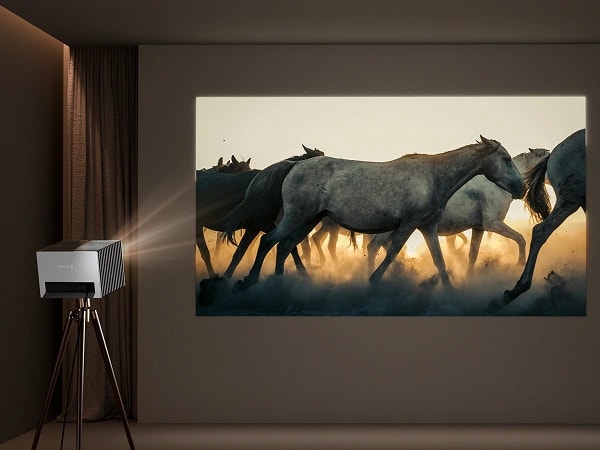
When comparing large-screen entertainment solutions, screen size is one of the biggest differences between TVs and projectors.Today’s largest premium televisions usually reach around 97 to 115 inches. While impressive, they still have physical limitations. Modern projectors, on the other hand, can easily create images beyond 100 inches, with some systems supporting 150, 200, or even 300 inches depending on the model and available space.A larger image naturally occupies more of your field of view, increasing the feeling of immersion. When viewed from the correct distance, a 120-inch projected image can make movies feel much closer to the theatrical experience.Although a large TV can provide excellent picture quality, it still maintains the feeling of a traditional screen. A projector transforms the entire viewing environment by making the content feel larger and more cinematic.
Why Color and Contrast Matter at Cinema Scale
Creating rich colors and deep contrast on a massive screen is one of the biggest technical challenges in home entertainment.As a projected image becomes larger, the same number of pixels must cover a wider surface area, which can reduce pixel density. In addition, digital keystone correction may further affect image sharpness if not properly managed.Modern RGB laser projectors solve many of these challenges by using advanced laser light sources instead of traditional lamp-based systems.Unlike older projectors that rely on white lamps and color filters, RGB laser technology produces colors more directly and efficiently. This enables a wider color range, stronger color volume, and improved HDR performance.With technologies such as wide color gamut coverage, RGB laser projection brings large-format home entertainment closer to professional cinema standards.
Gaming on a Large Screen: What Has Changed?
The best gaming display depends on what type of gamer you are.
The Advantage of TVs for Competitive Gaming
For competitive gaming, premium gaming TVs still maintain an advantage.They typically offer:
- Extremely low input latency
- Strong HDR brightness performance
- Native variable refresh rate (VRR) support
- Optimized compatibility with gaming consoles and PCs
For esports players who require the fastest possible response time, a high-end gaming TV remains the preferred choice.
The Advantage of Projectors for Immersive Gaming
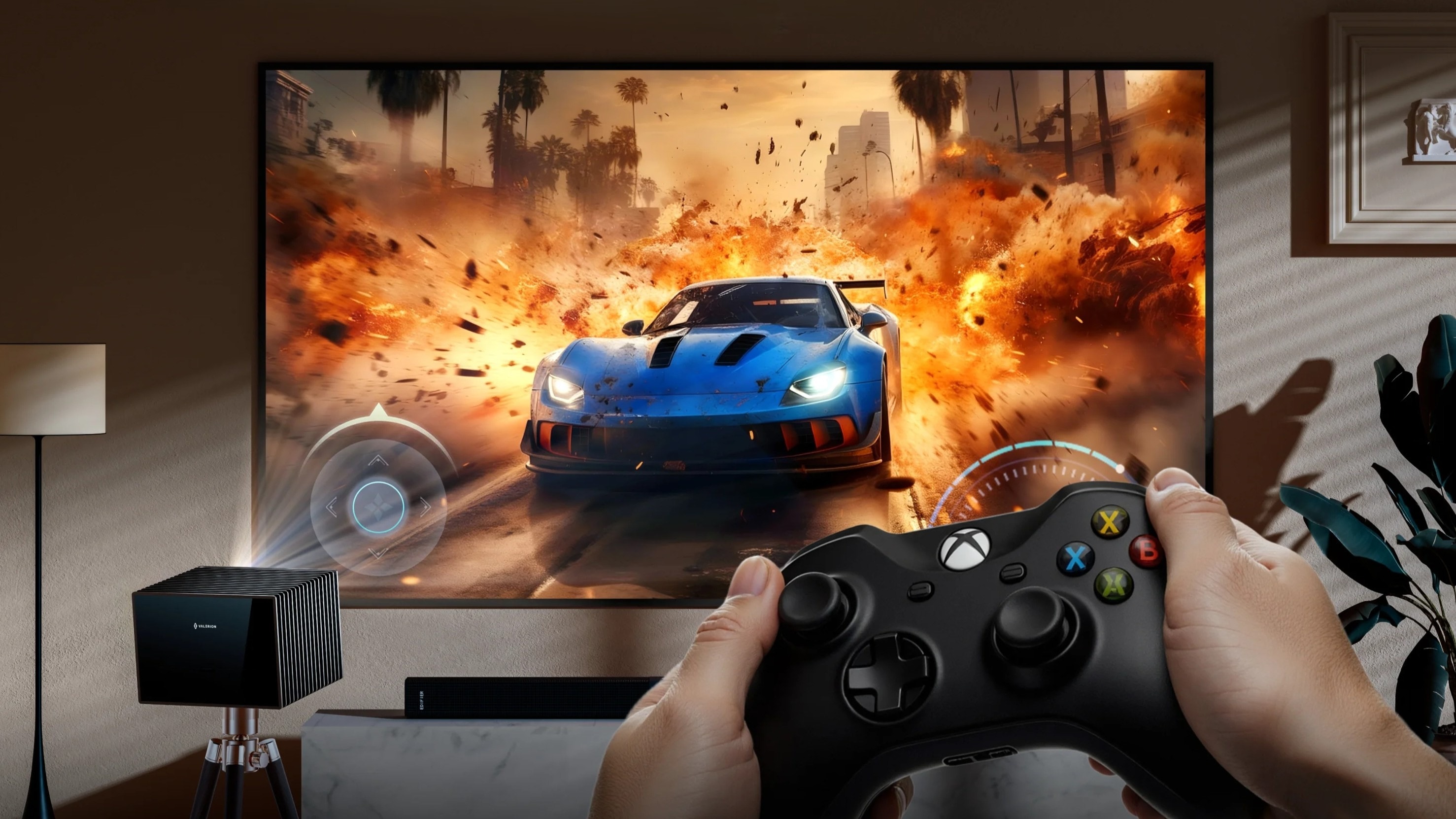
However, modern projectors are no longer the slow devices they once were.Older projectors often suffered from noticeable input lag, making them unsuitable for serious gaming. Modern laser projectors have improved significantly, offering ultra-low latency performance and advanced motion technologies.Features such as low input lag and MEMC motion processing allow projectors to deliver smooth gameplay.For story-driven games, racing simulators, adventure titles, and local multiplayer experiences, the massive screen size creates an unmatched level of immersion.
How a Home Theater Changes Your Living Room Design
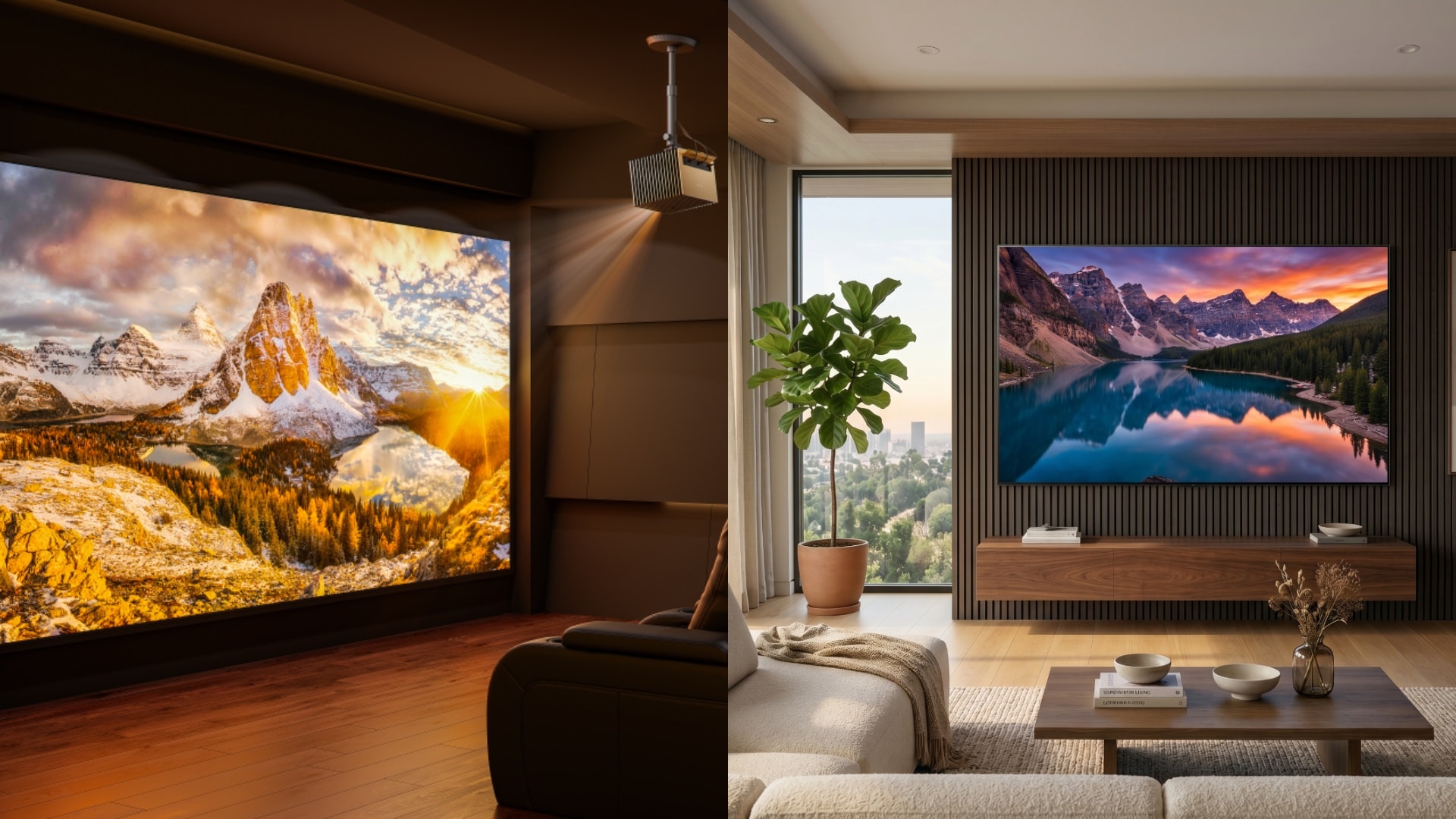
A modern home theater system can also improve the design flexibility of your living space.A traditional TV creates a permanent visual presence. The large black rectangle often becomes the main focus of the room and can limit interior design choices.Projector systems provide much more freedom.By pairing a projector with a motorized ALR (Ambient Light Rejecting) screen, the display can disappear when not in use. Instead of dedicating an entire wall to a television, the wall becomes a flexible part of the room.This creates a cleaner, more minimalist living environment without sacrificing a large-screen entertainment experience.
Eye Comfort and Viewing Fatigue
The display technology you choose can also affect viewing comfort during long entertainment sessions.Televisions are direct-emission displays, meaning they send light directly toward the viewer’s eyes.Projectors work differently. They project light onto a screen, and the reflected light reaches the viewer. This indirect lighting method reduces the harsh glare commonly associated with direct-view displays.Combined with larger viewing distances, projectors can provide a softer and more comfortable experience for long gaming sessions, movie marathons, or extended streaming.
The Real Cost of Going Bigger Than TV Limits
When comparing TVs and projectors, the biggest cost difference appears at very large screen sizes.At common sizes such as 65 or 75 inches, both options can be affordable. However, the price difference becomes much larger when moving beyond 85 inches.Large-format televisions become increasingly expensive as screen size increases. Moving from an 85-inch TV to a 100-inch or larger display can require a significant investment.Projectors offer better scaling efficiency. Once you own a premium projector, increasing the projected image from 100 inches to 150 inches does not require purchasing a completely new display.For users who want a true large-format experience, projectors provide a much more cost-effective path.
When a Traditional TV Still Makes More Sense
Despite the advantages of projectors, TVs remain the better choice in certain situations.A television is ideal if:
- Your room receives strong uncontrolled daylight
- You prefer simple plug-and-play operation
- You frequently watch content casually in the background
- You need the lowest possible latency for competitive gaming
Bright sunlight can reduce projector image quality, especially with entry-level models. In these environments, TVs provide consistent brightness without additional setup requirements.For users who prioritize convenience over immersion, a TV remains an excellent solution.
Head-to-Head Comparison: System vs. Screen
Scalability
Traditional TVs have fixed screen sizes. If you want a larger display, you must replace the entire television.Laser projector systems provide much greater scalability, allowing users to expand from 100 inches to beyond 200 inches without changing the core system.
Flexibility
A TV determines the layout of the room because its physical size and placement are fixed.A projector system provides more freedom. Screen size can be customized, and the projector can be mounted discreetly, allowing the room design to remain flexible.
Gaming
Premium TVs still provide the strongest performance for competitive gaming.However, modern laser projectors now offer low-latency gaming experiences that were impossible with older projector technology.
Immersion
Traditional TVs provide a familiar viewing experience.Projector-based home theaters create a much stronger cinematic feeling by filling more of the viewer’s vision and recreating the atmosphere of a commercial theater.
Which Setup Fits Your Living Room Best?
Choosing between a TV and a home theater system ultimately depends on your lifestyle and priorities.There is no single answer that works for everyone. The right choice depends on your room, viewing habits, and entertainment goals.
A TV Is the Better Choice If:
- You watch content casually in bright rooms
- You want a simple setup with minimal installation
- You often keep news or sports playing in the background
- You are a competitive gamer who requires maximum performance
A Home Theater System Is the Better Choice If:
- You want a true cinematic experience larger than 100 inches
- You prefer a clean and minimalist room design
- You enjoy immersive movies and story-driven games
- You want the most affordable way to achieve an ultra-large display
Experience the Next Generation of Home Theater Systems
Projector technology has changed dramatically.Modern laser projectors have moved beyond the limitations of older models, delivering brighter images, improved contrast, lower latency, and better overall performance.Gaming is no longer a weakness for projectors, as advanced systems can now compete with TVs in response time and refresh rates.Traditional lamp projectors also suffered from issues such as rainbow effects and reduced contrast. New RGB Triple Laser systems address these challenges by improving color accuracy, reducing visual artifacts, and maintaining strong brightness.The Valerion VisionMaster series represents this next generation of home theater technology, using RGB Triple Laser architecture to deliver a more immersive and cinematic viewing experience.
Frequently Asked Questions
Is a home theater better than a TV for everyday use?
It depends on your environment and viewing habits.Modern laser projectors can handle everyday entertainment very well, but TVs remain the better choice for extremely bright rooms, casual daytime viewing, and users who want zero maintenance.
Do laser projectors work in bright rooms?
Yes.When paired with an ALR screen, a high-brightness RGB laser projector can perform very well in rooms with moderate ambient lighting.However, direct sunlight can still reduce image quality.
How big should a home theater screen be?
For most living rooms, a screen size between 100 and 150 inches provides an excellent balance between immersion and practicality.Premium projectors can support even larger sizes, including displays approaching 300 inches when space allows.
Are projectors good for gaming in 2026?
Yes.Modern laser projectors offer extremely low input latency and high refresh rates, making them excellent choices for immersive gaming.While premium TVs remain slightly ahead for competitive gaming, projectors are ideal for cinematic games, racing titles, and multiplayer experiences.
Do laser projectors eliminate rainbow and halo effects?
Modern RGB triple-laser systems greatly reduce these issues.Older lamp and color-wheel projectors were more likely to produce rainbow artifacts and light leakage. Advanced laser systems provide cleaner images with stronger contrast, although performance can vary between models.
What is the lifespan of a laser projector?
Most modern laser light sources last approximately 20,000 to 30,000 hours.This can represent more than a decade of heavy daily use without requiring traditional lamp replacements.
Do you need a dedicated room for a home theater?
No.While a dedicated theater room can enhance the experience, modern laser projectors are designed for everyday living spaces.With an appropriate ALR screen, they can perform well in normal rooms and eliminate the need for a traditional dark basement theater.
Discover More Insights