Basement Home Theater Ideas: Transforming Your Dark Corner into a Dream Cinema
November 28, 2025
The basement. Often overlooked, frequently cluttered, and always dark—it’s the perfect candidate for transformation. When it comes to creating the ultimate entertainment space, the inherent darkness of a lower level isn't a flaw; it's the foundation for an immersive basement home theater. Whether you have a massive subterranean space or are designing a small basement home theater, these ideas will help you build a cinema experience superior to anything you’ll find outside your own front door.
Home Theater Design Ideas for a Stylish Basement Cinema
Designing a dedicated movie space requires careful planning to maximize both the look and the viewing quality.
Achieving Total Immersion: The Art of Light Control
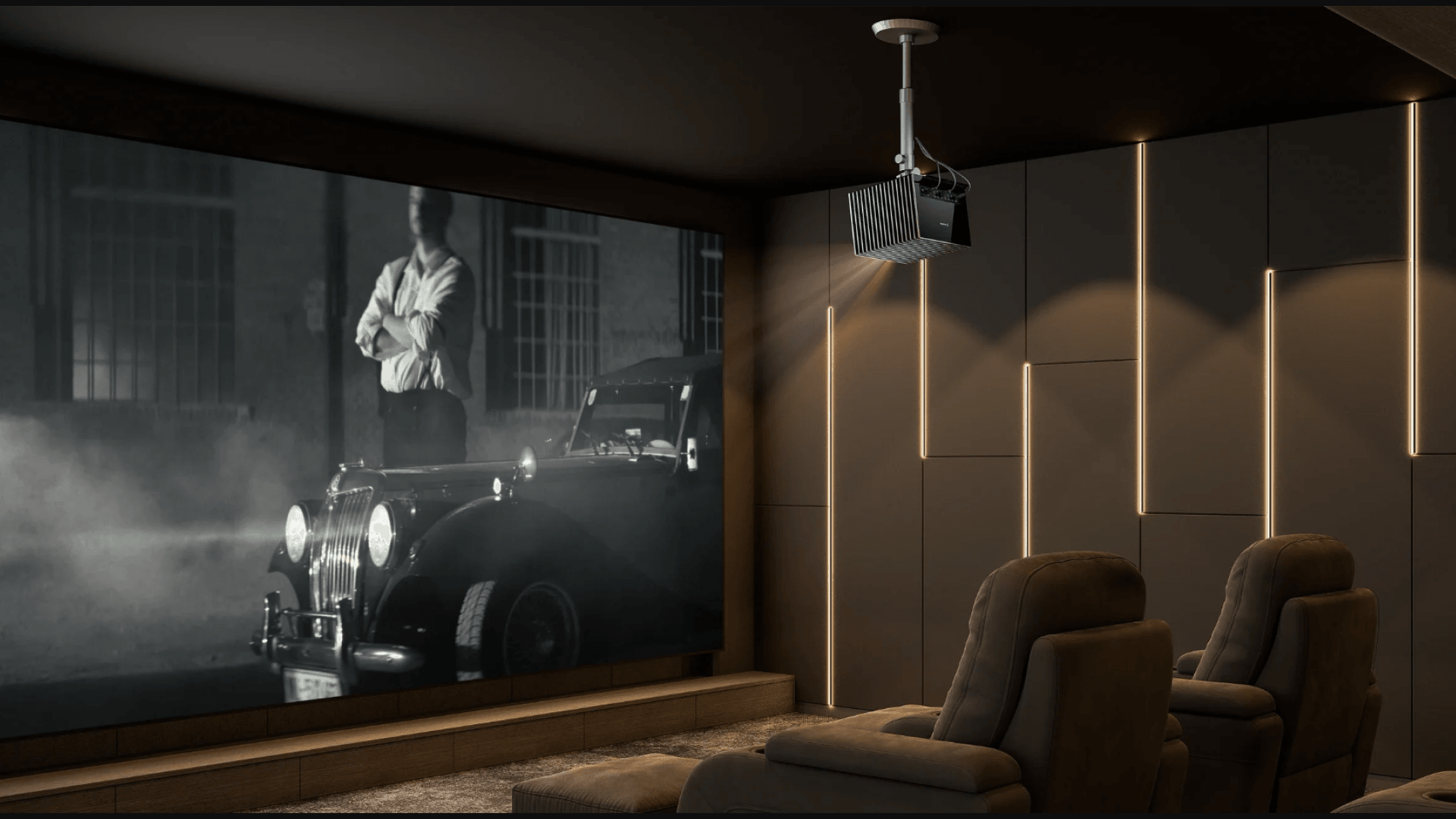
Unlike a living room, your basement cinema room needs total darkness. Choose dark, non-reflective paint hues for the walls and ceiling, including deep blue, charcoal gray, or black. These hues soak up light that spills out of the screen, which makes the picture and contrast much better. Use ambient lighting, such as rope lights along the baseboards or sconces that can be dimmed and cast light up or down instead of toward the screen.
The Perfect View: Designing Tiered Seating and Layout
The size of your area will determine how you arrange your seating. Tiered seating is a good option for full immersion. Even a simple two-tier layout with a sofa on a low platform behind a row of recliners will make sure that everyone can see the screen clearly. For the optimum geometry, always put the primary seating area directly across from the screen.
Basement Cinema Tech Checklist: Sound and Picture
Great design is worthless without outstanding A/V equipment. This section focuses on the non-negotiables for an immersive experience.
Screen Wars: Projector vs. TV for Cinematic Scale
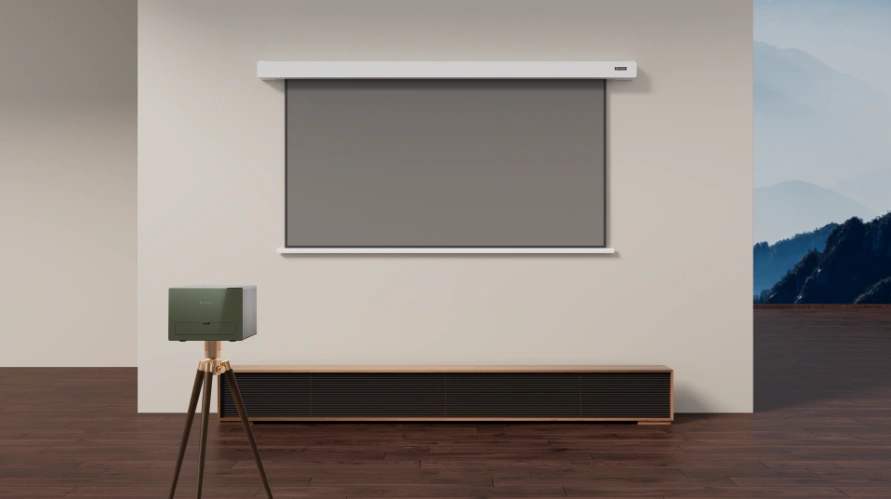
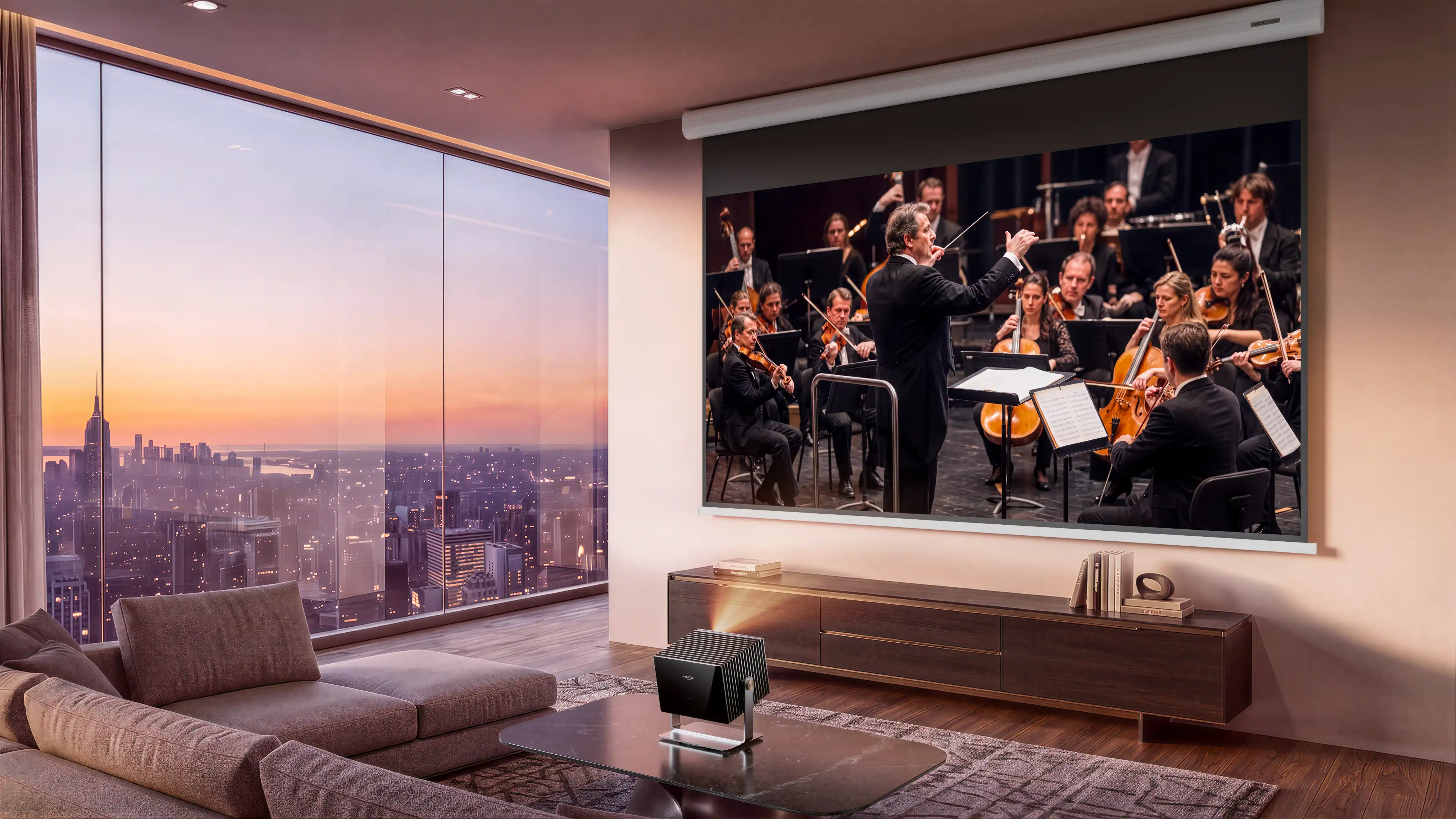
While large TVs (85 inches and up) are popular, the basement is the domain of the projector. A large projector screen (100–150 inches) provides true cinematic scale that is unmatched. When you plan, make sure to measure the size of your basement projector screen carefully. You need to make sure there is enough throw distance (the distance from the projector lens to the screen) for a clean picture. If you want the best picture quality, look at triple laser projectors. This high-end technology gives you amazing color accuracy and contrast, so you can have deep blacks and bright colors that really bring the Hollywood standard to your house.
Stop the Sound Spill: Essential Soundproofing and Acoustics
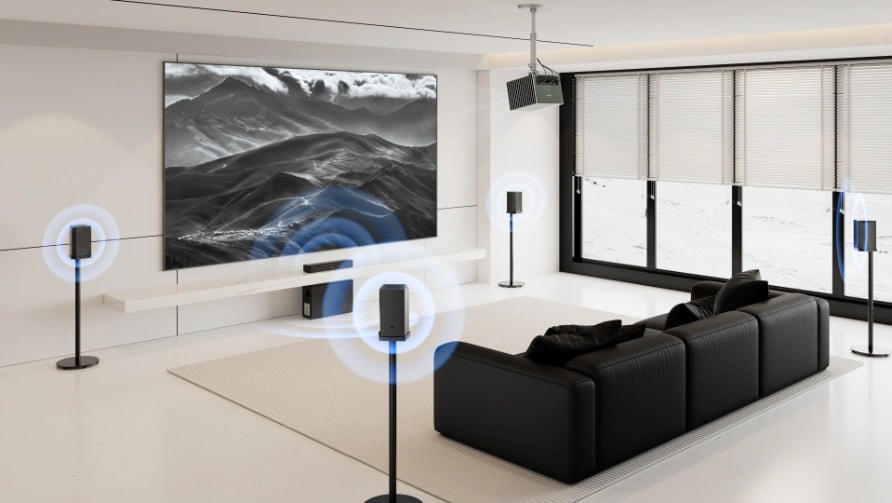
The boom of a movie explosion should be felt, not heard two floors up. Effective soundproofing of the basement theater walls and ceiling is essential. Start with mass-loaded vinyl (MLV) or specialty drywall. For acoustics inside the room, use sound-absorbing panels (acoustic foam or fabric panels) placed at the primary sound reflection points to prevent echoes. A high-quality 5.1 or 7.1 surround sound system with properly calibrated speaker placement will make the biggest difference.
Basement Theater Practicalities and Budget Considerations
The biggest constraint on any home renovation is usually the budget. You can build an incredible basement movie room for any budget. Here are three common approaches to budgeting your project:
- Starter Cinema ($2,000 - $5,000): Focus on maximizing existing elements. This includes repurposing comfortable seating, using a large existing TV instead of a projector, and investing in a quality soundbar or basic 5.1 system.
- Mid-Range Immersion ($5,000 - $15,000): This budget allows for significant upgrades, such as dedicated theater recliners, a reliable 4K projector setup, in-wall speaker installation, and the addition of simple acoustic panels for better sound quality.
- Luxury Experience ($15,000+): At this level, you can achieve a truly custom build. Expect high-end equipment, professional acoustic treatment, smart lighting controls, custom cabinetry, and built-in tiered seating.
How to Make Your Basement Theater Comfortable and Functional
Make your theater work. Think about putting in a mini-bar, a small popcorn machine integrated into a counter, or specialized hidden storage basement theater cupboards for snacks and films. Keeping these things close by cuts down on distractions and makes the theater experience feel more real. You should also plan for HVAC because a basement can get stuffy or cold, which can make things uncomfortable and shorten the life of your equipment.
Conclusion
One of the best home upgrades you can make is to turn a dull basement into a lively home theater. You can make the perfect, bespoke home theater ideas for your basement room that everyone in the neighborhood will want by focusing on light control, optimizing your audio-visual equipment, and constructing a comfortable arrangement.
Member Benefits
Bring Your Cinema Experience Further
Subscribe and receive a $50 Welcome Benefit plus 4 pairs of 3D glasses, along with exclusive Valerion updates.

Points & Rewards

Member Pricing

Early Access

Priority Support
Discover More Insights