What is an ALR Projector Screen? The Ultimate Guide to Daytime Viewing
March 6, 2026
Are washed-out, contrast-lacking images holding you back from using a projector during the day? This happens because standard screens reflect ambient light. To eliminate reflections of ambient light and improve image quality, Ambient Light Rejecting (ALR) screens were developed. An ALR screen is more than a gray fabric; it’s an optical filter, rejecting ambient light by optimizing its microstructure or multi-layer surface, helping projectors work well during the day and replacing TVs.
The “Invisible Enemy”: How Ambient Light Destroys the Projected Image
When the projector screen reflects ambient light simultaneously with the projector’s light, the image appears dull, washed out, and gray instead of black.
Can a High-Lumen Projector Overcome Ambient Light?
Yes, if the projector is bright enough. However, even the brightest projector cannot compete with direct sunlight. A bright projector can be used during the day with a DIY projector screen, but the results won’t be as good with an anti-light screen. In such cases, a high-brightness model like AWOL Valerion projector can be used, which outputs 3500 ISO Lumens, enough to avoid the need for a perfect black box.
Standard Matte White Screen vs Ambient Light Rejecting Projector Screen
ALR screen and standard matte white screen are developed based on different principles.
- Standard Matte White Screen: It operates on the principle of scattering light evenly in all directions to make the image appear bright and uniform. Due to its simplicity, it's a cost-effective solution.
- ALR Projector Screen: It works like a mirror, reflecting ambient light away from the viewer, not the projector’s light, making the image appear brighter with enhanced contrast using gain, which is not possible with a standard matte white projector screen.
How Does an ALR Screen Actually Work?
It is a multi-layered design with micro-engineered lens arrays to selectively reject ambient light without affecting the projector’s light. These lens arrays absorb and reflect the light from other sources away from the viewer. The ALR screen has semi-circular arrays (Fresnel) or repeating optical structure (Lenticular/Grid), which work the same way by rejecting the ambient light or absorbing it.
5 Key Benefits of Upgrading to an ALR Projector Screen
The benefits of such screens range from improved black levels to reduced eye strain.
- Restoring Contrast and Black Levels
High contrast and deep blacks make images look alive. An ALR screen ensures that contrast is maintained across the screen and that black doesn’t appear gray in ambient light.
- Daytime Usability (TV Replacement)
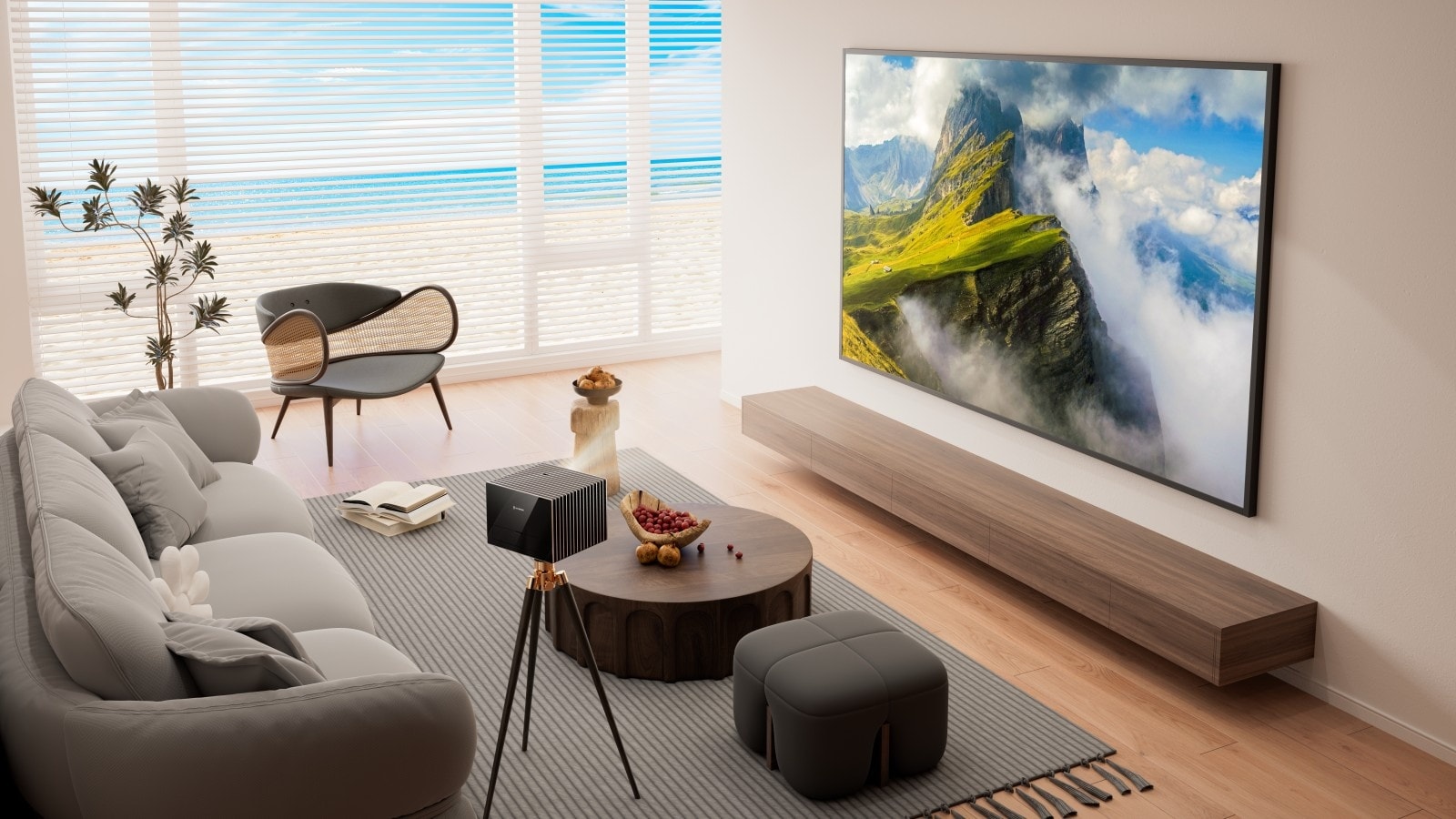
Projector use shouldn’t be limited to night or dark rooms after the advancement of anti-light screens. The benefit of the ALR screen is that you can use a bright projector during the day without glare.
- Color Saturation Retention
Color saturation is not uniform across the screen when the image size exceeds 100 inches, whereas a white wall vs. an ALR screen ensures that colors appear the same across every inch of the screen. When ambient light is present, other screens affect the projector's color gamut, limiting its potential.
- Increased Eye Comfort
Blue light strains the eyes with prolonged exposure. Strain increases with direct exposure, as with TVs. TVs use LEDs to emit light, whereas projectors use diffuse reflection, which reduces exposure to blue light. Because the projection screen can be 100 inches, you don’t have to squint to read or view minute details, whereas the TV screen size stays fixed, straining your eyes.
- Brightness Uniformity
Unlike other matte screens, this screen maintains consistent brightness across the screen. This reduces the screen's glossy appearance, where light is reflected away from the viewer or absorbed.
Types of ALR Screens: A Detailed Overview
What type of ALR projector screen to use depends on the projector’s throw ratio. Mispairing them will affect your image quality, ruining your experience.
For Long or Standard Throw Projector (Fresnel and Standard ALR)
When the projector is mounted far away or on the ceiling, the image appears dull due to decreased light intensity with distance. This makes ambient light easily overwhelm the projector's light source. To reject ambient light and make images appear brighter, Fresnel technology is used in ambient light-rejecting projector screens.
These are ideal for a long-throw projector. For example, the Valerion Fresnel ALR Screen uses micro semi-circular structures to focus the projector’s light directly onto the viewer, maximizing brightness in long-throw setups while rejecting up to 85% of ambient light.
For Short Throw (UST) Projectors (Lenticular/Grid)
When your projector is placed close to the projection screen, whether on a stand, the floor, or a wall, the light intensity is concentrated at the point closest to both the projector and the screen. On other screens, a glossy or milky image appearance is common with such a short throw distance.
The benefit of the ALR screen with a Lenticular or Grid pattern is that it fixes the glowing spot and makes the image appear bright across the screen. Are you confused about which material is the right fit for your room? Check out our detailed Fresnel vs. Lenticular ALR Screen Guide.
Angular-Reflective vs. Retro-Reflective in ALR Screens
They both work in unique ways: one rejects light, while the other reflects it. What makes them unique?
- Angular Reflective ALR Screen: This projector screen reflects light at the same angle at which it falls onto the screen. If an ambient light source is at a 30-degree angle, its light will be reflected back with the same angle, away from the viewer, so that the experience isn’t ruined.
- Retro Reflective ALR Screen: It reflects light back toward the source. It is ideal when the projector and viewer are positioned close together, as the light returns directly to the viewer's eyes while deflecting side-light back to the walls.
ALR Screen vs. White Wall: Is It Worth the Investment?
Most projector owners ask, “White wall vs. ALR screen, which is better, and why should I not just use my wall?” Here’s why:
- Texture and Sharpness: Even if your white-painted wall seems smooth, texture is still present. When an image is projected onto them, the sharpness of the 4K image decreases as the brightness is drastically lowered.
- Reflectivity (Gain): Whether your wall has matte or glossy white paint, ambient light is reflected because it lacks the advanced technology to absorb it. For example, red paint absorbs blue and green light while reflecting red light.
But white paint reflects every color that hits it from other walls. This effect accumulates, and the image doesn’t appear uniform, whereas these screens can gain brightness, making the image appear brighter than it should.
The Verdict: White walls reflect every light, potentially losing 50% of your projector’s contrast, while ALR screens let your projector replace a TV for daytime use.
Limitations of an ALR Screen: What You Should Know Before Buying
ALR projector screens make images appear higher quality, but the anti-light screen has some disadvantages.
- Viewing Angles: Higher-gain ALR screens make images brighter but reduce viewing angles due to narrower arrays. The image won’t look best when viewed at extreme angles. The benefit of lower-gain screens is their broader viewing angles.
- Price: An ambient light-rejecting screen is an investment to replace the TV, but its cost is added to a projector setup. These screens often cost more than a standard white screen.
FAQs About ALR Screen
Can I use an ALR screen in a dark room?
Yes, it improves black levels, making the contrast appear better than on a standard white screen.
Does an ALR screen reduce brightness compared to a white screen?
Technically, yes, but the gain compensation makes the perceived image brighter because of micro-structure arrays on the screen. However, they have a gain effect on brightness, making the image appear uniform across the screen, whereas white screens have a bright spot where the projector's light first falls.
Do ALR screens work with 3D projectors?
Yes. The ALR screen doesn’t interfere with the 3D effect. Instead, it enhances the viewing experience by rejecting ambient light and delivering deeper black levels.
How do I clean an ALR screen?
Remove excess dirt with compressed air. Always use a microfiber cloth to clean. If the ALR screen has grid patterns, never clean with a vertical motion; use only horizontal wipes. For Fresnel screens, use a semi-circular motion
Can I use an ALR projector screen outdoors?
Yes, it will enhance the viewing experience by absorbing ambient light. Ensure to clean afterwards.
Conclusion: Is the ALR Projector Screen Worth It?
Yes, whether you are using a projector during the day or in a perfect home theater, an ALR projector screen enhances your experience by retaining contrast, delivering deeper black levels, and improving brightness uniformity across the screen. If a white wall is used as a projector screen, the projected image won’t have better contrast.
The key benefit of the ALR screen is that the projector can now replace a TV during the day as well, without screen-size limitations. Some anti-light screens have more gain than others because of the different microstructure used in their manufacturing. Check out the Valerion Fresnel ALR Screen, which has 1.8 gain (compared to 1.5 in others) and rejects 85% of ambient light.
Member Benefits
Bring Your Cinema Experience Further
Subscribe and receive a $50 Welcome Benefit plus 4 pairs of 3D glasses, along with exclusive Valerion updates.

Points & Rewards

Member Pricing

Early Access

Priority Support
Discover More Insights