Home theater installation in 2026 can cost anywhere from $2,000 to $100,000+, depending on how much equipment you want and how much of the work you hire out. A basic media room may cost $2,000–$7,000, a mid-range setup $7,000–$15,000, a dedicated theater $15,000–$45,000, and a fully custom room $45,000–$100,000+.
Current estimates put professional installation around $10,000–$60,000, with Angi reporting a $25,000 average and HomeAdvisor about $20,000. HomeGuide puts complete home theaters at roughly $2,000–$42,000+, while Audio Advice says most of its custom theaters fall around $10,000–$50,000.
The Four-Tier Map (Where Your Project Sits)
|
Tier |
Cost Range |
What's In It |
Who It's For |
|
Basic Media Room |
$2,000–$7,000 |
65"–75" TV or entry projector, soundbar/2.1, existing room |
A better living-room setup |
|
Mid-Range Setup |
$7,000–$15,000 |
75"–85" TV or 4K projector, dedicated screen, 5.1/5.1.2 Atmos |
A serious first home theater |
|
Dedicated Theater Room |
$15,000–$45,000 |
4K laser projector, 100"–135" screen, surround sound, treatment, seating |
A separate theater room |
|
Luxury and Custom |
$45,000–$100,000+ |
Reference projection, isolation, automation, multiple rows, dedicated HVAC |
Full custom-integrator projects |
The important part is that equipment and installation are separate budget decisions. A $15,000 project could mean $10,000 of equipment and a relatively small installation bill, or a much more involved professional build with less money going into the hardware.
Basic Media Room — $2,000–$7,000
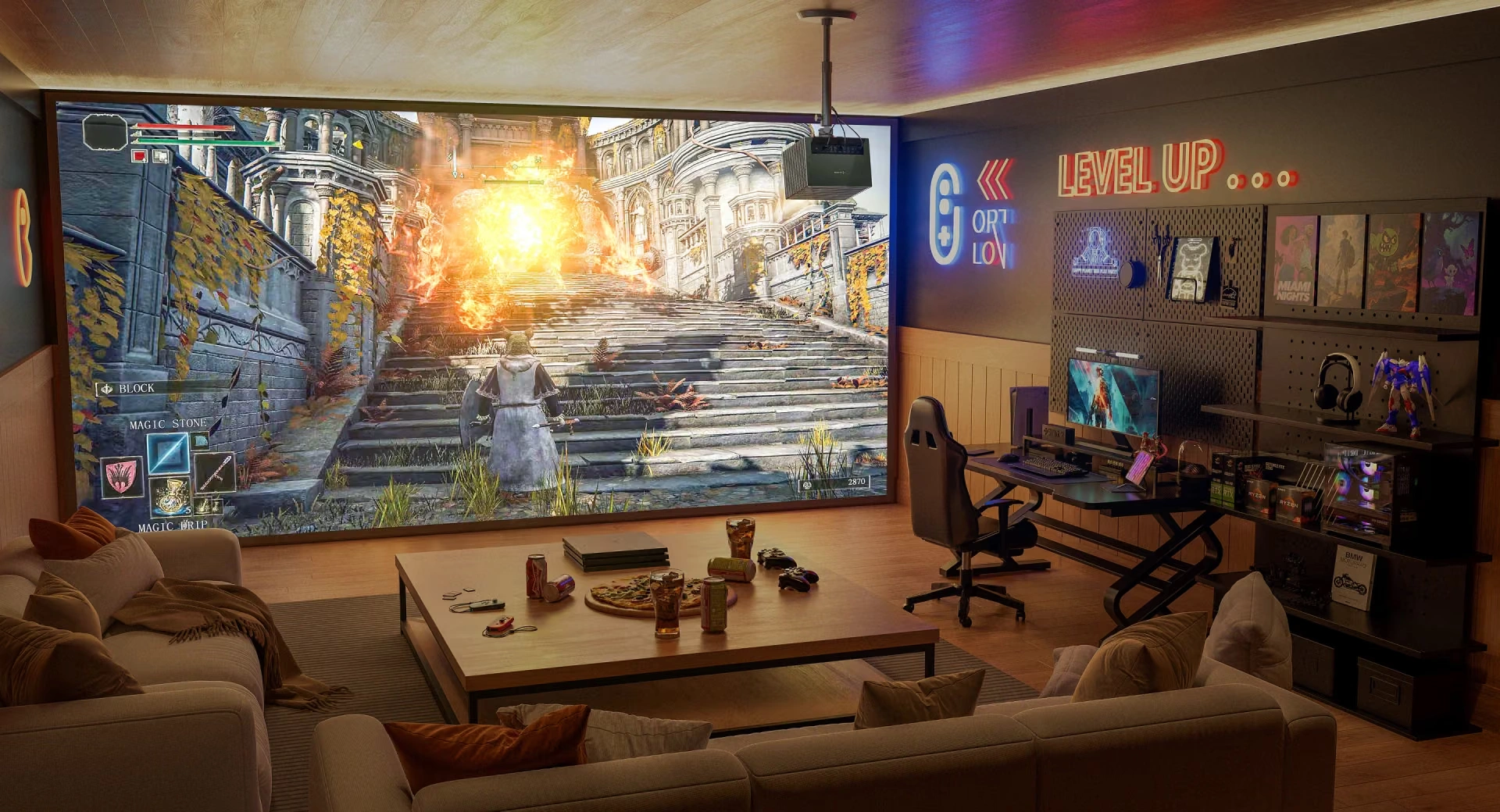
Think 65"–75" TV or an entry-level projector, a soundbar or 2.1 system, and an existing room that doesn't need construction or acoustic work. You save most of the money by handling mounting, cables and setup yourself.
Mid-Range Setup — $7,000–$15,000
This is where a lot of first-time buyers will be looking: a 75"–85" TV or 4K projector with a dedicated screen, 5.1 or 5.1.2 Atmos, modest acoustic treatment and possibly a one-day professional installation. If you're asking how much does home theater installation cost, this is a practical range to start pricing.
Dedicated Theater Room — $15,000–$45,000
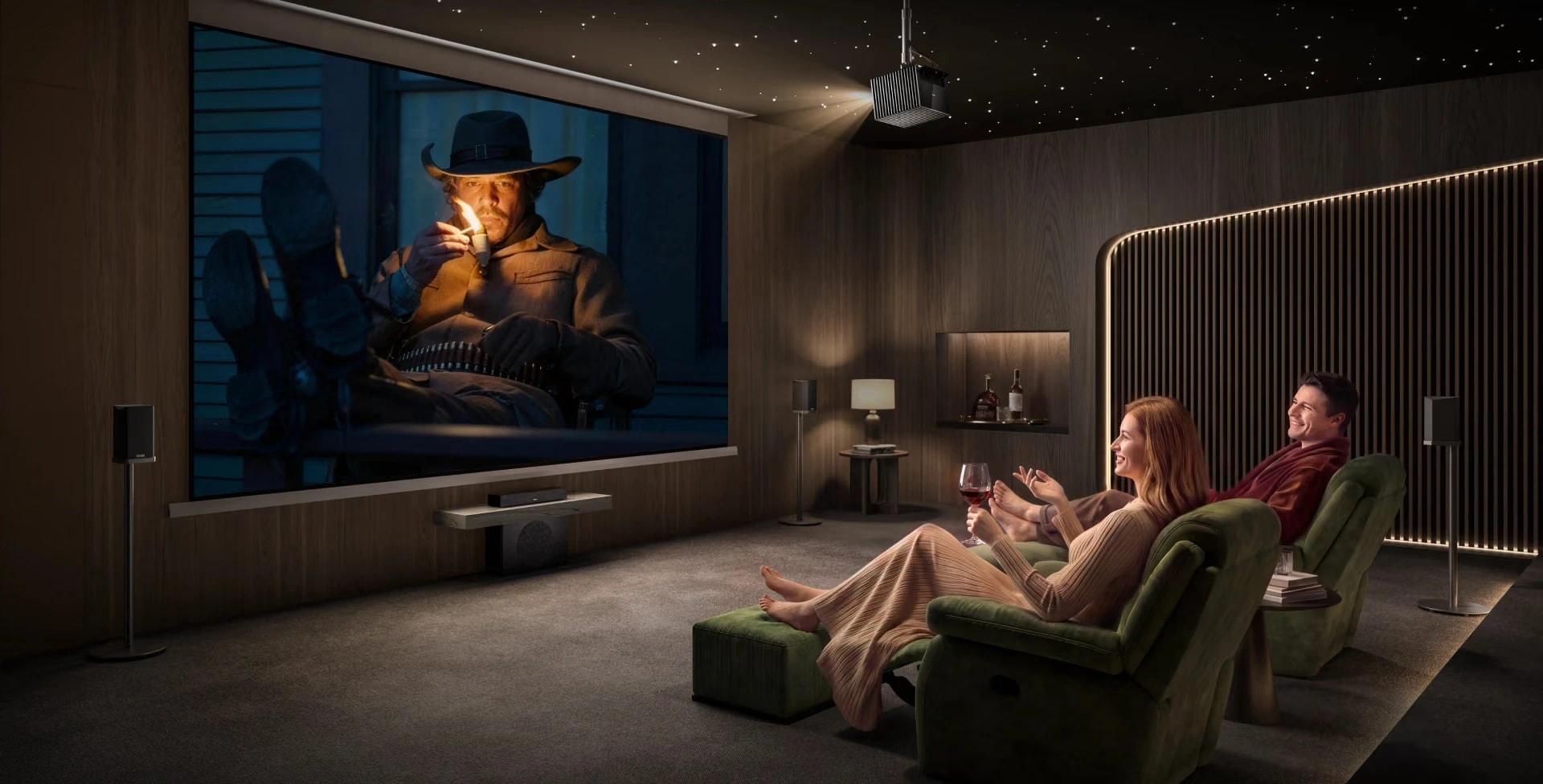
Now you're building a room around the system. A typical setup could include a 4K laser projector, 100"–135" fixed or ALR screen, 7.1 or 7.1.4 Atmos, in-wall or ceiling speakers, acoustic panels, bass traps, riser seating, dimmable lighting and a dedicated circuit.
Luxury and Custom — $45,000–$100,000+
At this level, the room itself becomes part of the project. Think acoustically isolated construction, multiple seating rows, automation, lighting scenes, dedicated HVAC and potentially structural or electrical work. This is custom-integrator territory.
What You're Actually Paying For
Most quotes can be reduced to five buckets: display, audio, labor, room treatment and seating, and hidden costs.
Display and Screen
The display is usually the first major swing in the budget. $500 gets you a 65" TV; $2,000–$6,000 can get you a competent laser-projector-and-screen bundle; $10,000+ gets you into dedicated laser projection with higher-end optics.
Projectors have a wider price spread because you're also paying for lens design, throw distance, light source and, in some cases, an ALR screen and ceiling mounting. If you're still working out the screen size, start with the right screen size for your room rather than buying the projector first.
Audio (5.1 / Dolby Atmos / 7.1.4)
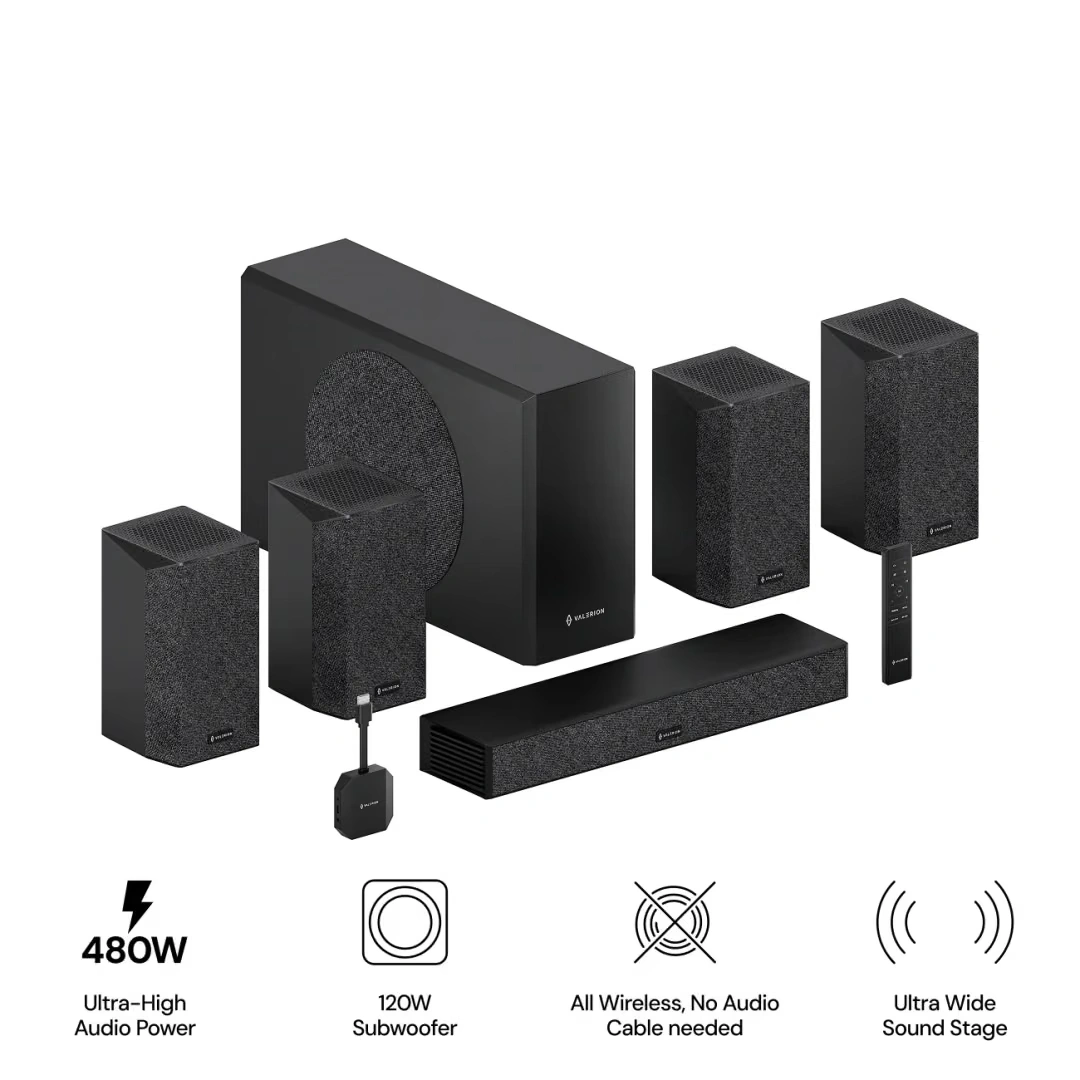
A basic soundbar or 2.0 setup can start around $300. A 5.1 system can run roughly $1,500–$5,000, while 5.1.2–5.1.4 Atmos systems often land around $3,000–$7,000. A more substantial 7.1.4 system can reach $5,000–$12,000.
The catch is that additional speakers aren't just an equipment expense. In-wall and in-ceiling channels also mean more cable runs, cutting, installation and setup. That's why speaker placement drives placement labor as much as it affects the final sound.
Labor: Hours × Rate
The simplest way to understand labor cost for home theater installation is to multiply the hourly rate by the hours involved.
General labor can run around $50/hour, AV specialists around $100–$150/hour, and high-end integrators $150+/hour. A TV mount and soundbar might take a day or two. A projector, surround system and acoustic work can take several days, while a full theater build may take a week or more.
The math is straightforward: $150/hour × 25 hours = $3,750 before you've bought a single piece of equipment.
Room Treatment and Seating
DIY acoustic panels can run $300–$1,000, professional treatment roughly $1,000–$5,000, and full acoustic engineering can climb to $5,000–$15,000+. Seating ranges from about $300–$2,000 per recliner, with tiered seating and risers adding several thousand dollars.
Acoustic treatment is easy to cut from a quote because it isn't as exciting as a new projector. But it can make a bigger difference to how the finished room sounds than spending the same money on another equipment upgrade.
Permits, Cleanup, Warranties — The "Hidden" Lines
Don't forget permits, structural work, cleanup, extended warranties and sales tax. Permits alone can run from around $50 to $1,000 depending on the work and location.
If walls or ceilings have to be opened, wiring and structural work can add considerably more. An honest quote itemizes these costs. A quote that leaves them vague deserves a closer look.
Three Installation Paths — and What Each Dollar Buys
Path A: Pure DIY (Your Weekend, Your Risk)
DIY can mean 20–60 hours of your own time, plus tools, cable management, mounting, and a learning curve around calibration. The invoice may show $0 in labor, but your time isn't actually free.
If you value your time at $200/hour, 30 hours of DIY work represents $6,000 of your time. That's not necessarily a reason to hire someone; it's simply a better way to compare the options.
For the parts you're doing yourself, our projector setup guide can help with the practical setup process.
Path B: One-Day Pro Install + You Finish the Rest
This is often the middle ground. Have a specialist handle the jobs that are harder to redo later: ceiling mounting, in-wall speaker runs, screen mounting, receiver setup and calibration. You handle seating, decor and simpler finishing work.
Path C: Full Custom Integrator
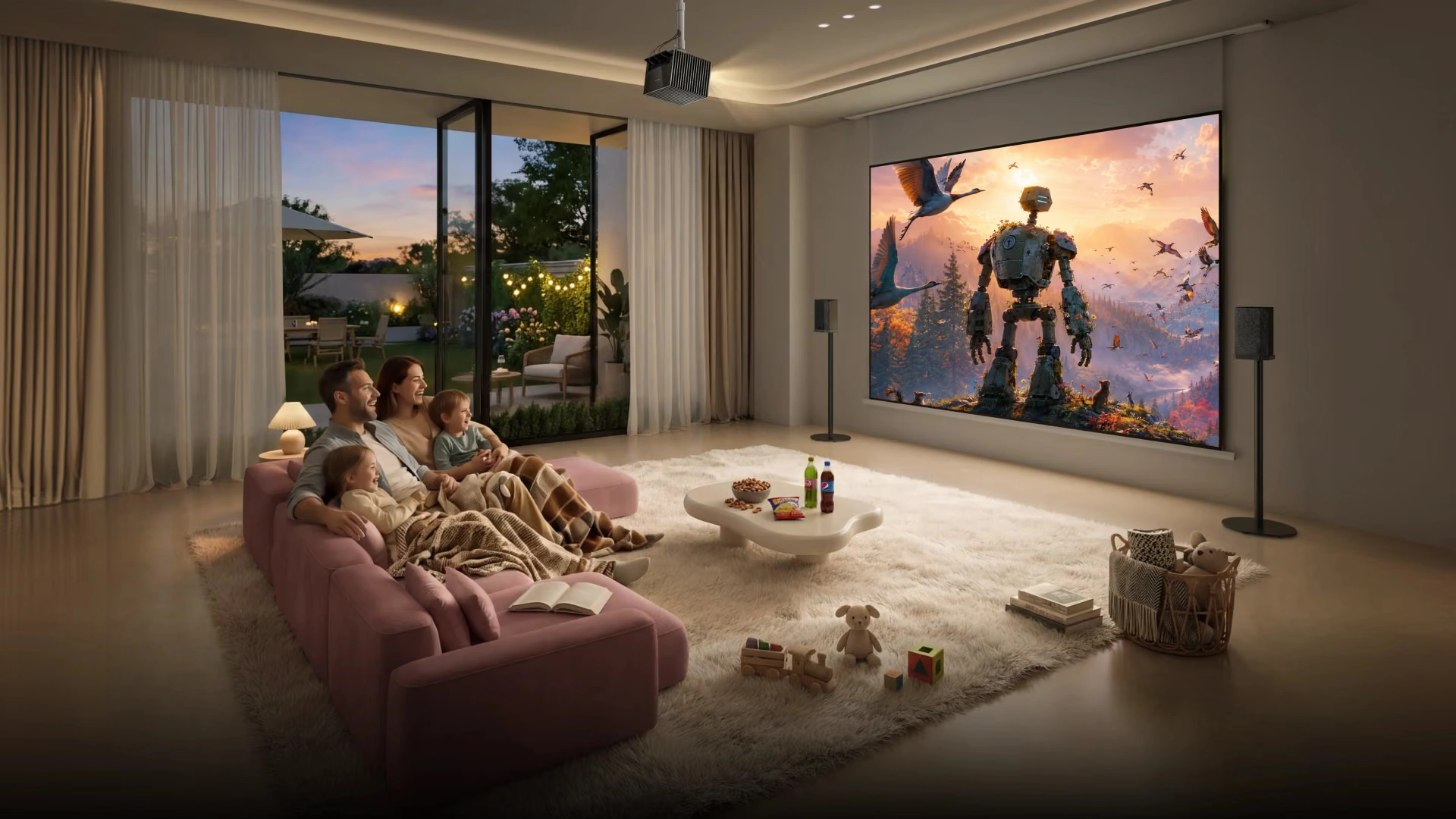
A $25,000–$60,000 integrator project may include design consultations, multiple site visits, wiring plans, custom cabinetry, structural or electrical work, automation and a longer warranty.
You're paying for more than equipment. You're paying someone to coordinate the whole project and take responsibility for how the pieces work together. Whether that's worth it depends largely on how much time and complexity you want to take on yourself.
The Same $7,000 Looks Different in Each Path
|
Path |
What $7K Might Buy |
What You Give Up |
|
DIY |
Laser projector, ALR screen, 5.1 audio and your own installation |
Time, convenience, and professional calibration |
|
One-day pro |
Better equipment plus professional mounting, wiring or setup |
Some DIY flexibility |
|
Full integrator |
A smaller portion of a professionally managed project |
Equipment budget, but far less project management |
The point isn't that one path is better. It's that the same $7,000 can buy very different things depending on who is doing the work.
Is Your Quote Reasonable? A 60-Second Sanity Check
The "$14K for a Small Room" Test
A $14,000–$18,000 quote can be reasonable if it includes a 4K projector, ALR screen, 5.1.2 or 7.1.4 Atmos, in-wall speakers, acoustic treatment, dimmable lighting, a dedicated circuit and calibration.
That's a fairly complete dedicated theater. If you're working with a sub-200-square-foot room and only want a projector, screen, and basic sound, however, that same quote may be more scope than you need.
Cost per Square Foot Ranges
As a rough planning check, these are the current figures to plan projects around:
|
Room Size |
Rough Cost Range |
|
100–200 sq. ft. |
$2,000–$5,000 |
|
200–400 sq. ft. |
$5,000–$20,000 |
|
400–800 sq. ft. |
$15,000–$50,000 |
|
800+ sq. ft. |
$30,000–$100,000 |
These aren't exact formulas. A small room with expensive equipment can cost more than a larger room with basic gear.
Five Questions to Ask Any Installer
- Is the quote itemized by display, audio, labor and treatment?
- Does the labor line include calibration, or is that separate?
- What's not included that I should expect to add later?
- How many hours are built into the quote, and at what rate?
- What does the warranty cover, and for how long?
A good installer should be comfortable answering all five questions clearly and without vague estimates. If they can't explain where your money is going, what's included in the labor, or what happens if something goes wrong after installation, that's a reason to pause before signing
The Cost Levers You Can Actually Pull
Display Type and Image Size (TV vs Projector)
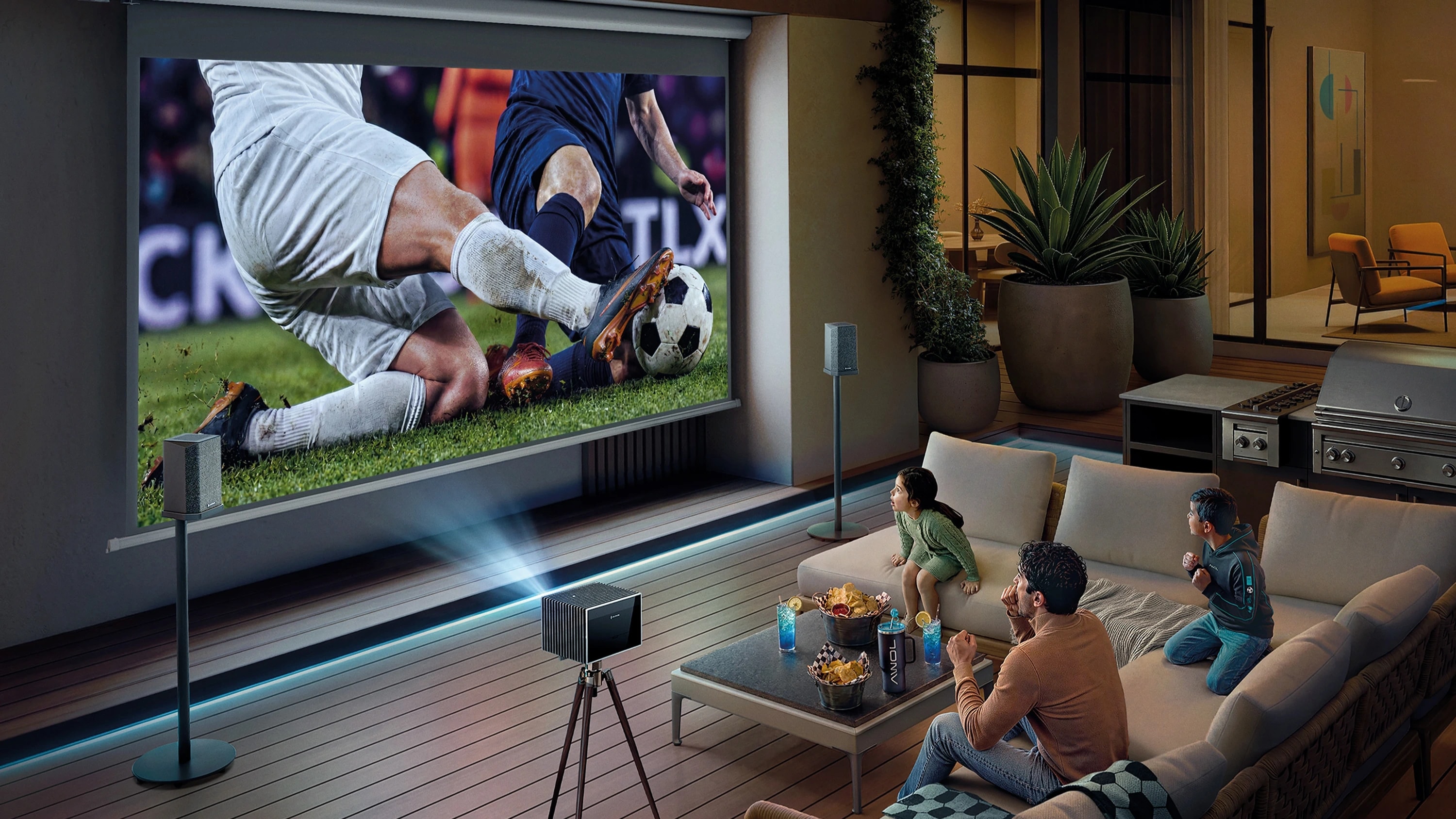
A TV generally means a simpler mount, fewer cables and less alignment work. A projector gives you a much larger image but adds a screen, mounting and positioning considerations.
The labor difference isn't always the biggest part of the equation. Often, the larger decision is simply how much display you want for your money. For the broader equipment comparison, see projector vs TV.
Throw Ratio, Optical Zoom, and Ceiling-Mount Hours
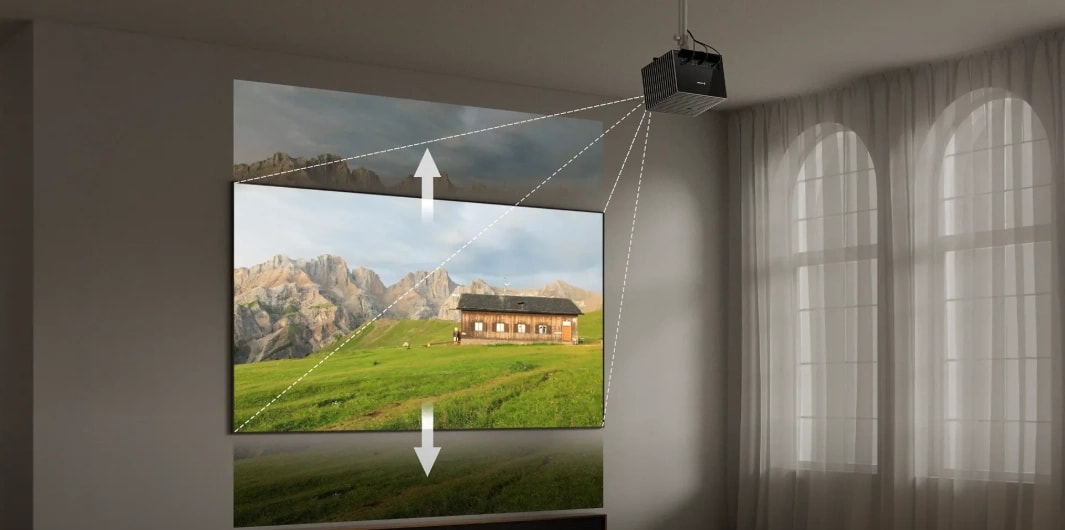
Throw ratio matters because it determines where the projector can sit relative to the screen. A fixed-throw projector gives the installer less freedom. Optical zoom, by contrast, gives more placement flexibility without relying on digital image manipulation.
Features such as autofocus, automatic keystone correction and screen alignment can also make final setup easier. They don't eliminate the need for proper mounting, but they can reduce the amount of manual adjustment afterward.
Screen Type (Fixed Frame / Motorized / ALR)
Fixed-frame screens are usually the simplest to install and can cost roughly $200–$1,500. Motorized screens often run $500–$2,000 and may require electrical work. ALR screens can range from about $500 to $3,000+ and need to be matched carefully to the projector and room.
See the differences between fixed-frame and motorized screens or learn what an ALR projector screen does.
Audio Configuration
More speakers mean more equipment, cable and installation work. A basic 5.1 system may be all you need; moving to 7.1.4 makes more sense when the room and listening position justify it.
Don't add Atmos channels simply because the quote has room for them. Spend the money where you'll actually hear the difference.
Acoustic Treatment (DIY vs Professional)
You can spend a few hundred dollars on DIY absorption, around $1,500–$5,000 on professional treatment and measurement, or considerably more on full acoustic engineering.
For most home theaters, the middle ground is worth considering. Good placement and sensible treatment can improve dialogue, bass and overall balance without turning the room into a recording studio.
Wiring, Region, Permits, Hidden Costs
Wiring costs depend heavily on access. Running cable while a room is already open is much easier than fishing it through finished walls and ceilings. Angi currently puts standard home-theater wiring around $1,000–$2,500, with permits and wall repairs potentially adding more.
Local labor rates also matter. And if you're modifying electrical circuits or the structure itself, check permit requirements before work begins.
When a Projector + Screen Costs Less to Install Than a Big TV
Why "Premium Display" Doesn't Have to Mean "Premium Labor"
A premium projector doesn't automatically require a premium installation bill. The right combination of optical zoom and automated setup features can make positioning and final adjustment easier.
That's particularly useful when the projector needs to be ceiling-mounted, and the room doesn't give the installer much freedom.
A Reference Setup: Install-Friendly Projector Specs
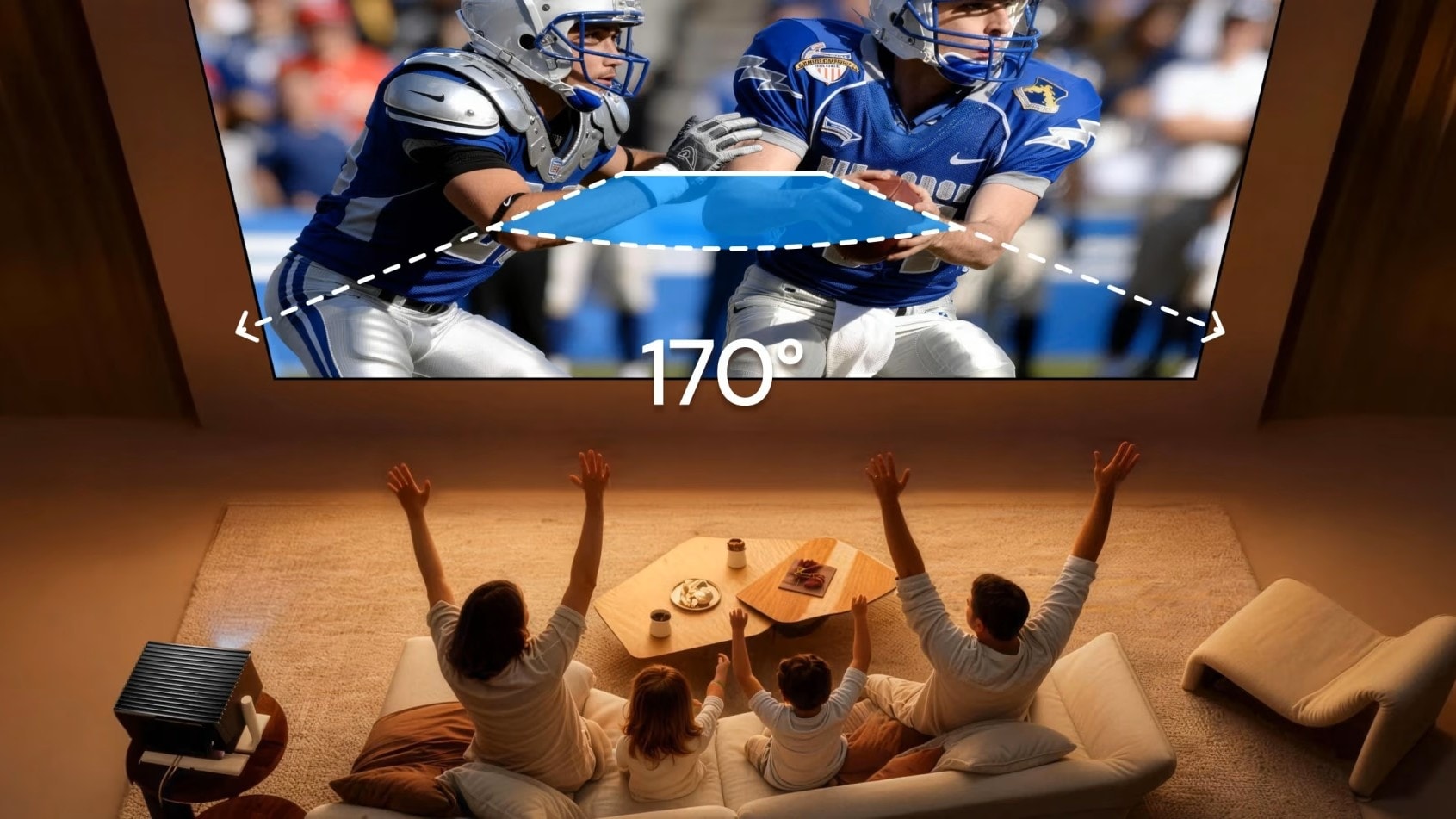
An RGB triple-laser projector like the AWOL Valerion MAX is a useful reference point. The laser light source alone changes the install calculus — no bulb replacements to plan around, with a rated lifespan north of 25,000 hours. A 0.9-1.5:1 optical zoom gives real placement flexibility without sacrificing image quality, so the mount position doesn't have to be exact.
Auto-focus, auto-keystone, and auto-screen-alignment do the fine-tuning that used to eat up install time, and between those and the compact chassis (roughly 10"×7"×8", about 15 lbs), the ceiling-mount job that used to take three hours can drop to well under two; less bracket wrangling, fewer manual adjustments. ISF-certified color out of the box means you can skip a separate calibration service entirely.
The point isn't that these features remove installation work. They make the installation and final setup less dependent on repeated manual adjustments.
If You'd Rather Go Ultra-Short-Throw
If you don't want a ceiling-mounted projector at all, AWOL Vision offers triple-laser ultra-short-throw models that sit close to the screen. That changes the installation problem rather than eliminating it: wall positioning and screen selection become more important, while ceiling mounting largely disappears.
Five Quick Scenarios by Budget
~$3,000 — Living-Room Upgrade
A 65"–75" TV, soundbar or 2.1 system and perhaps a basic wall mount. Use the existing room and skip unnecessary construction. This is the simplest route to a noticeably better viewing setup without turning the living room into a project.
~$7,000 — Serious Home Viewing
A sub-$3,000-class 4K laser projector, 100" matte-white or ALR screen, entry-level 5.1 or Atmos audio and a one-day professional installation for the mount and receiver setup. Handle the remaining finishing work yourself.
~$15,000 — Dedicated Room
A mid-range laser projector and ALR screen, 5.1.2 or 7.1 audio, basic acoustic treatment, dimmable lighting, and professional help with the more technical installation. This is where the room starts to feel deliberately built around the viewing experience.
~$30,000 — Premium Dedicated
Move up to a higher-end projector and screen, 7.1.4 Atmos, fuller acoustic treatment, riser or tiered seating, and automation. At this point, a full integrator becomes more useful because there are simply more pieces to coordinate.
~$60,000+ — Cinema-Grade
Now you're talking about reference-level projection, a large ALR screen, acoustic isolation, multiple seating rows, dedicated HVAC, lighting scenes, and extensive automation. At this level, the construction and integration work can cost as much as—or more than—the individual AV components.
The Bottom Line
The easiest way to budget a home theater is to separate what you want to own from what you want someone else to do.
Start with the four tiers, decide whether you're doing the work yourself, hiring a specialist for the difficult parts or handing the whole project to an integrator, and then use the five questions above to pressure-test any quote.
If you're still choosing the display, you can browse the projector collection, or look at the AWOL Valerion MAX as one example of a projector designed to balance large-screen performance with a relatively straightforward setup.