Do You Need a Screen for a Projector? When a Wall Is Enough
November 11, 2026
You do not need a dedicated screen to use a projector. A smooth, neutral-coloured wall can be enough to get started, particularly in a darkened room. Whether a screen is worth buying depends on your wall, the room’s lighting and what you expect from the picture.
Perhaps you have cleared a wall for your first film night, moved the sofa into position and found a picture size that feels right. Before adding a screen to the shopping list, spend some time watching. The useful question is whether a screen would solve a problem you can actually see.
For your Valerion setup, the projection surface deserves the same consideration as projector placement and room lighting. Here is how to decide whether to start with the wall or make room for a screen.
When Is a Wall Enough for a Projector?
A wall is a reasonable starting point when it is flat, smooth and neutral in colour, and you can control the light reaching it.
Picture an evening film in a spare room: the curtains are closed, the lights are dimmed and the image fills an uncluttered wall. If the picture looks satisfying from your seat and the surface does not distract you, you may not need a screen immediately.
Using a wall also gives you time to try different picture sizes before committing to a fixed screen. Stay within your projector’s supported image sizes and placement requirements, and choose a size that feels comfortable from the sofa.
A blank wall, however, is not necessarily a suitable projection surface. Three characteristics deserve a closer look:
- Texture: raised paint, wallpaper patterns and uneven plaster can remain visible within the picture.
- Colour: coloured paint can tint the image. Even an apparently white wall may have a warm or cool cast.
- Finish: glossy paint or patches of different sheen can create distracting reflections and uneven brightness.
A matt finish is generally a better starting point than a glossy one, but the wall’s colour, texture and flatness still matter.
What Difference Does a Projector Screen Make?
A suitable screen provides a surface designed for projection, with more controlled reflective characteristics than ordinary household paint.
It can remove visible wall texture from the picture and provide a consistent surface across the image. A correctly installed fixed-frame or tensioned screen can also give you a flat viewing area with clearly defined edges.
Screen materials vary, though. Some distribute light across a broad seating area; others direct more light towards particular viewing positions. The material that suits one room may be less effective in another.
A screen does not increase your projector’s native resolution, correct poor focus or eliminate every effect of ambient light. Its value lies in how well it works with the projector and room.
Try Your Wall Before You Decide
Use your normal viewing conditions to judge whether a screen would help. A quick demonstration in a completely dark room may tell you little about how the setup will look on a Sunday afternoon.
Set the Picture Size and Focus First
Position your projector according to its installation guidance, align the picture and adjust the focus. Choose the image size you expect to use regularly.
Then return to your usual seat. A small wall imperfection visible at arm’s length may be irrelevant from the sofa, while a larger patch or colour variation may remain distracting.
Watch a Few Different Scenes
Familiar films are useful because you already know how they should look.
Faces can help you notice unnatural colour. Bright, relatively uniform scenes can reveal wall texture or uneven reflection. Dark scenes show how easily you can follow detail when the room is lit.
These observations can help identify a concern, although they cannot establish its cause on their own. Colour settings, source material and projector positioning can also affect what you see.
Change the Lighting
Replay the same scene with the lights dimmed or curtains closed. Notice how much the picture changes.
If it becomes substantially more satisfying when less light reaches the wall, consider light control before assuming you need a new projection surface. Curtains, blinds or moving a lamp may be useful first steps.
Projector light output and picture size also belong in this decision. Our projector lumens guide explores brightness in more detail.
Identify What You Want to Improve
A specific observation is more useful than a general wish for “better picture quality”.
|
What you notice |
What to check first |
|
Wall texture is visible during films |
Whether a smoother projection surface would remove the distraction |
|
Colours look consistently tinted |
Wall colour and projector picture settings |
|
The picture looks washed out with lights on |
Light reaching the surface and your options for controlling it |
|
Text or fine detail looks soft |
Focus, alignment, source quality and surface texture |
|
Some areas look brighter than others |
Wall finish and projection geometry |
|
The image looks satisfying during normal use |
Whether a screen offers an improvement you currently need |
Use this as a starting point. Several factors can contribute to the same visible problem.
When Is a Projector Screen Worth Buying?
A screen is easier to justify when it addresses a limitation you have identified or supports a permanent room layout.
The Wall Is Part of the Problem
If texture, paint patches or unevenness remain distracting from your seat, a screen offers an alternative to preparing and repainting the wall.
Choose its construction carefully. A loose or poorly installed screen can introduce wrinkles or waves, so buying a screen alone does not guarantee a flat surface.
You Have Found Your Preferred Layout
Once you know your picture size and projector position, you can choose a screen around the room.
Check its full dimensions, including the frame or housing, alongside your furniture, speakers and viewing height. Make sure the projector can fill it from the intended position.
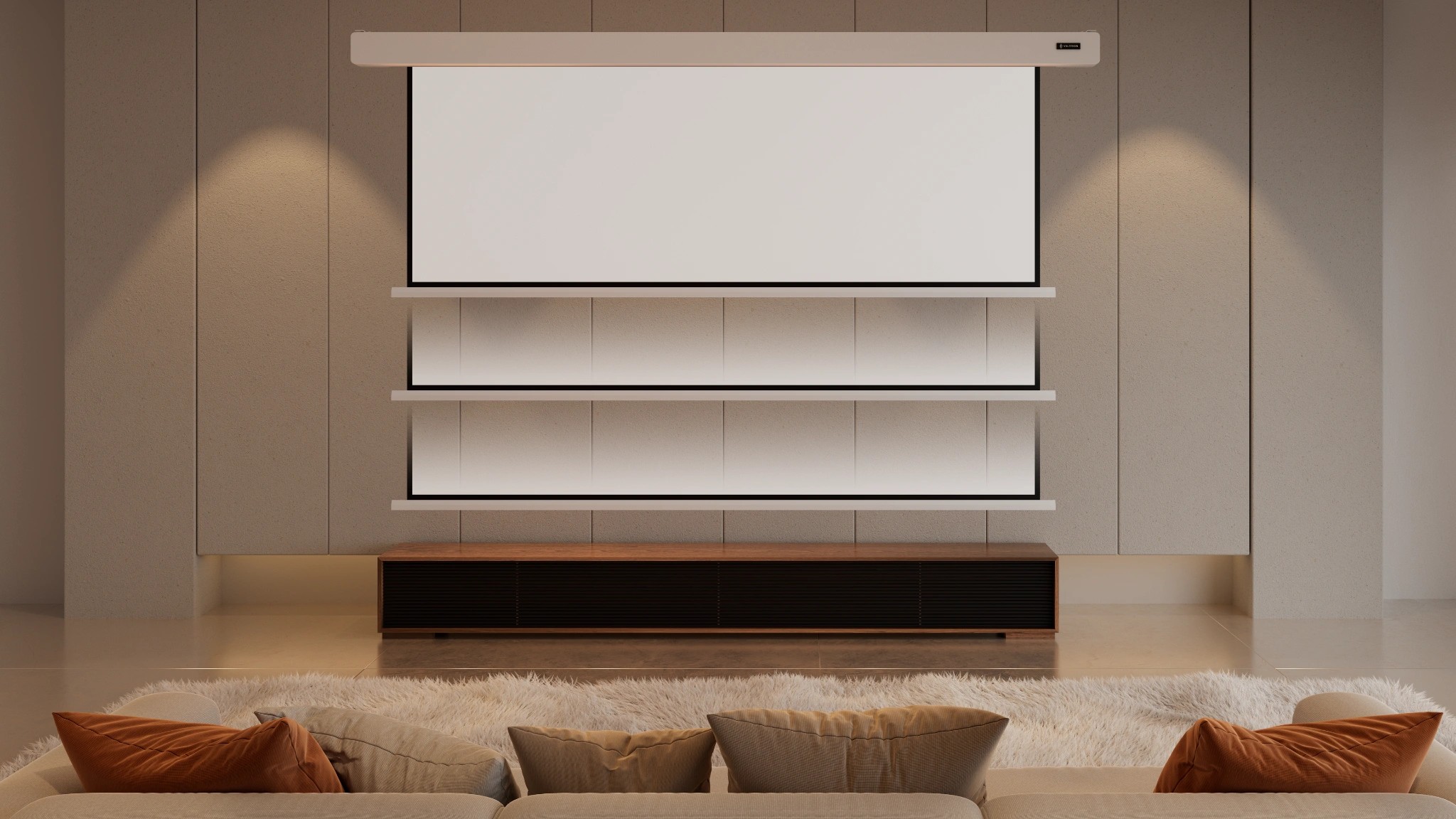
In a shared living room, a retractable screen may suit everyday use. In a dedicated space, a fixed frame may fit more naturally. Installation requirements and available storage should be part of the decision.
You Want a More Controlled Viewing Surface
If film nights have become a regular part of the week, you may want to remove the uncertainty of projecting onto household paint.
A suitable screen gives you specified material characteristics to work with. Those specifications still need to suit your projector position, seating arrangement and room lighting.
Do You Need an ALR Screen?
An ambient light rejecting, or ALR, screen is worth investigating when you cannot sufficiently control room lighting. These materials are designed to reduce the effect of light arriving from certain directions while directing projected light towards the viewing area.
The result depends on where the light comes from and how the projector, screen and seats are arranged. ALR does not make ambient light irrelevant, and some materials have narrower useful viewing angles than others.
Match the screen to the projector’s throw type and installation requirements. A screen designed for ultra short throw projection is not interchangeable with one intended for a conventional front-projection setup.
Before choosing, check:
- Supported projector types and throw requirements.
- Recommended projector and screen positions.
- Viewing-angle guidance for your seating layout.
- Whether the material suits the direction of light in your room.
If samples are available, trying the material in your intended setup can help you assess its appearance before committing to a full screen.
What Can You Use Instead of a Projector Screen?
A suitable wall is often the simplest option because it is already in place and requires no storage.
A white sheet can work for a temporary film night, but folds, movement and light passing through the fabric may affect the picture. Stretching it out can reduce wrinkles, though it will not give the fabric the optical characteristics of a purpose-made screen.
Projection paint is another possibility. The result depends on the product and careful surface preparation: paint will not flatten uneven plaster, and it cannot remove light falling onto the picture.
Consider the total effort as well as the initial cost. A temporary solution that needs extensive adjustment each time may become less appealing if you watch frequently.
Should You Buy a Screen Now or Later?
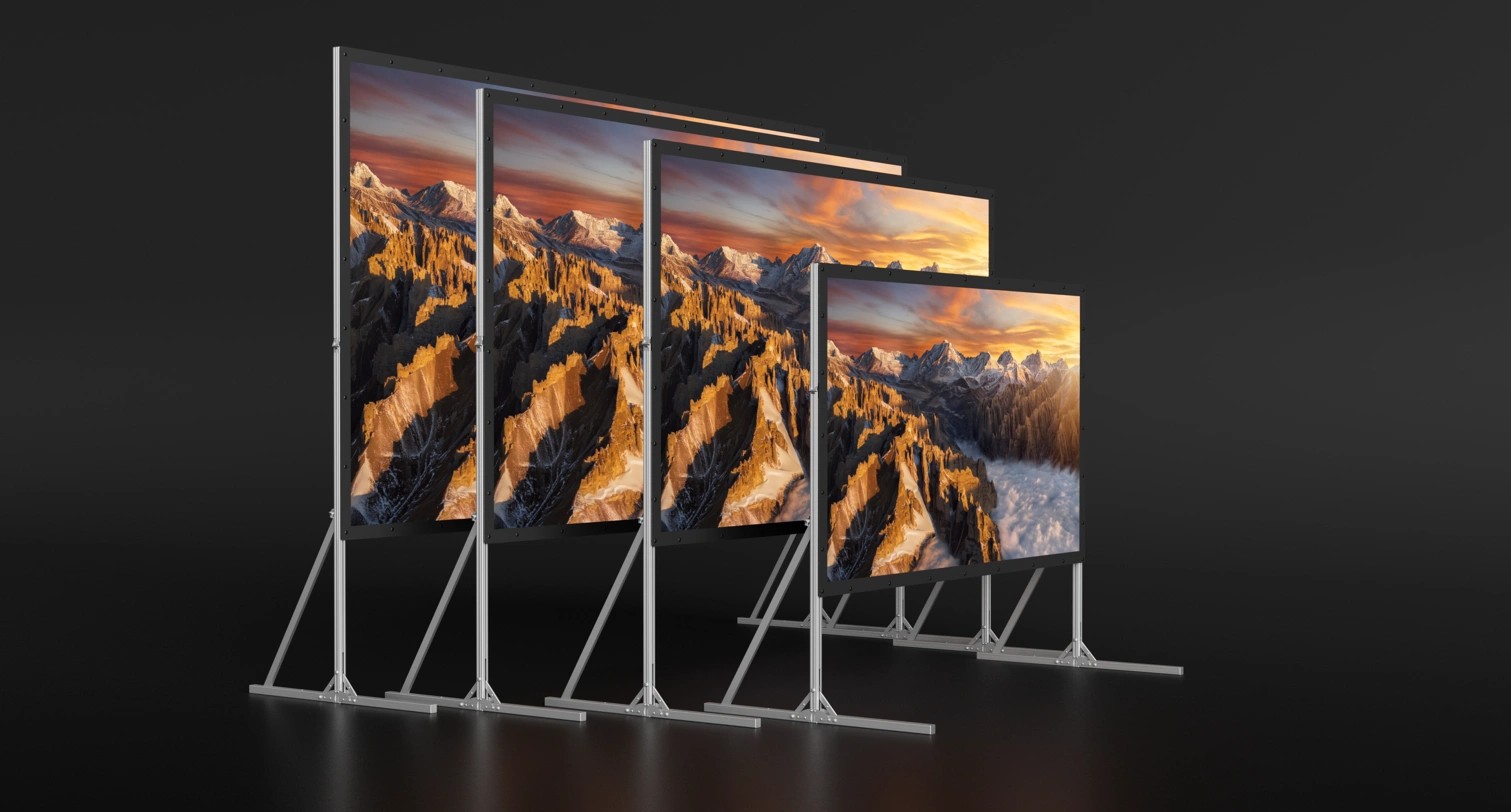
Start with the wall if it is suitable and you are still working out the room. Watch at your intended picture size, from your usual seat and at the times you normally use the projector.
If the wall distracts you, investigate a better surface. If lighting is the main problem, work on light control and assess compatible screen options. If the picture already meets your expectations, take time to settle on the layout before buying.
For your Valerion setup, plan the projector, surface and room together. A screen is worth adding when you know what you want it to improve—and have chosen one that fits the way you watch.
Discover More Insights