Gray Projector Screen Buying Guide: Is It Right for You?
October 15, 2026
You've invested in a great projector. But the screen it shines on decides how much of that performance you actually see. Pick the wrong surface, and deep night scenes turn into a washed-out gray haze. Pick the right one, and the picture gains depth, punch, and that "real cinema" feel.
This guide explains how gray screens differ from traditional white screens, who should choose which, and what to look for in a motorized drop-down design. It also introduces the new AWOL Valerion CineContrast Motorized Drop-Down Gray Fiberglass Screen.
Step 1: Understand Screen Gain (and Why Lower Can Be Better)
Gain measures how much light a screen reflects compared with a reference white surface.
- A white matte screen has a gain of around 1.0. It reflects light evenly and gives a bright, clean image.
- A gray screen typically has a gain below 1.0. The CineContrast measures around 0.7.
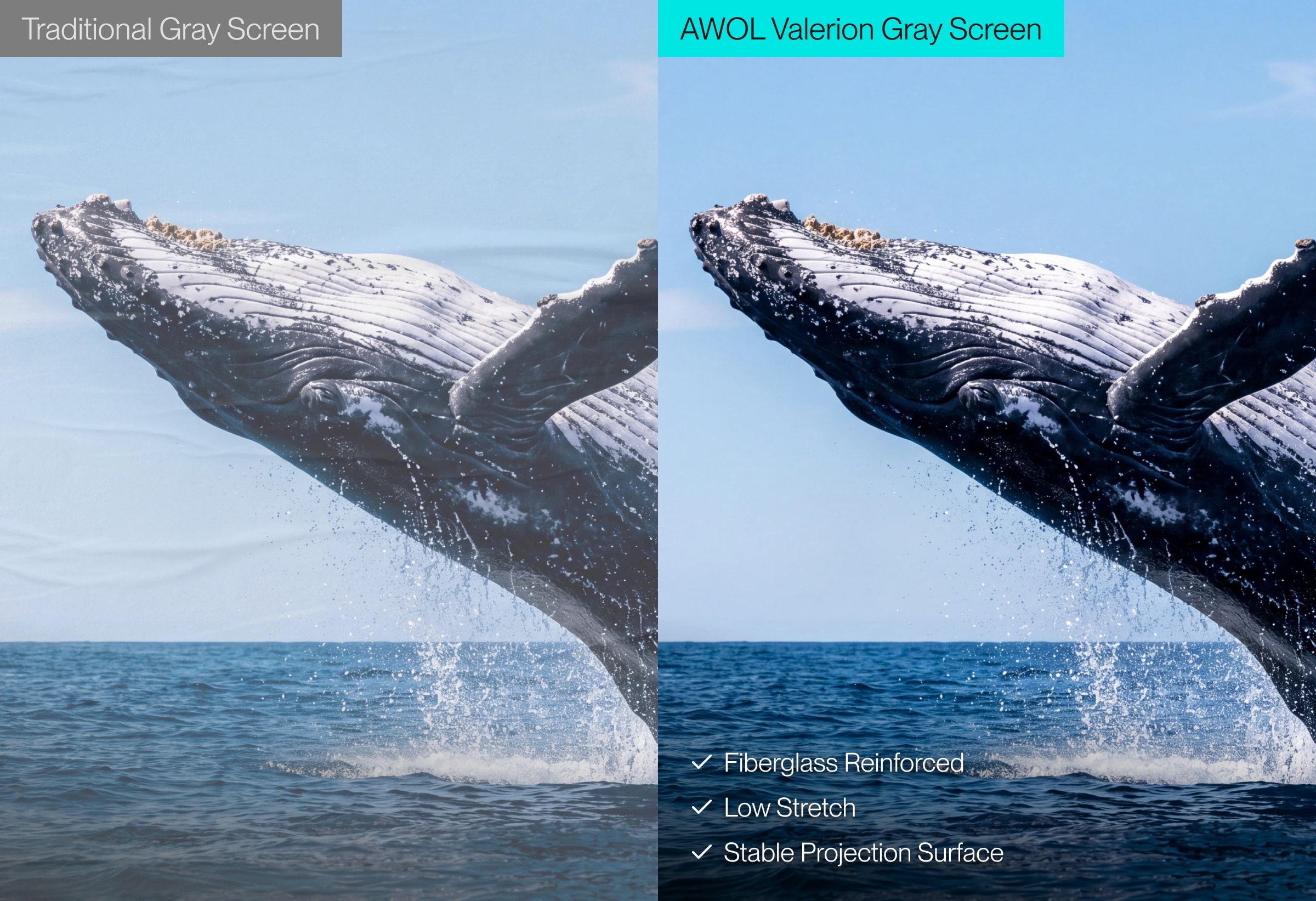
A gray screen is slightly dimmer, and that is the point. Gray surfaces absorb stray light bouncing around the room, including light from walls, ceilings, and lamps. They also keep your projector's black levels from being lifted into gray. You trade a little peak brightness for noticeably better contrast, black levels, and color depth.

Step 2: Know What a Gray Screen Does for Your Picture
- Higher contrast, with more cinematic dark scenes
By lowering screen gain, a gray screen keeps ambient light from "diluting" the image, so the difference between light and dark is easier to see. Night cityscapes, shadowy interiors, character silhouettes, and layered backgrounds stay distinct instead of blending together. The picture gains depth, and you feel more immersed in it.
2. Deeper, more convincing blacks
On a white screen, black often looks like dark gray. A gray screen is better at holding blacks down, which gives dark scenes a steadier, more solid look. This matters most for movies, streaming dramas, and moody games, where shadow detail and atmosphere carry the experience.
3. Better performance in real living rooms
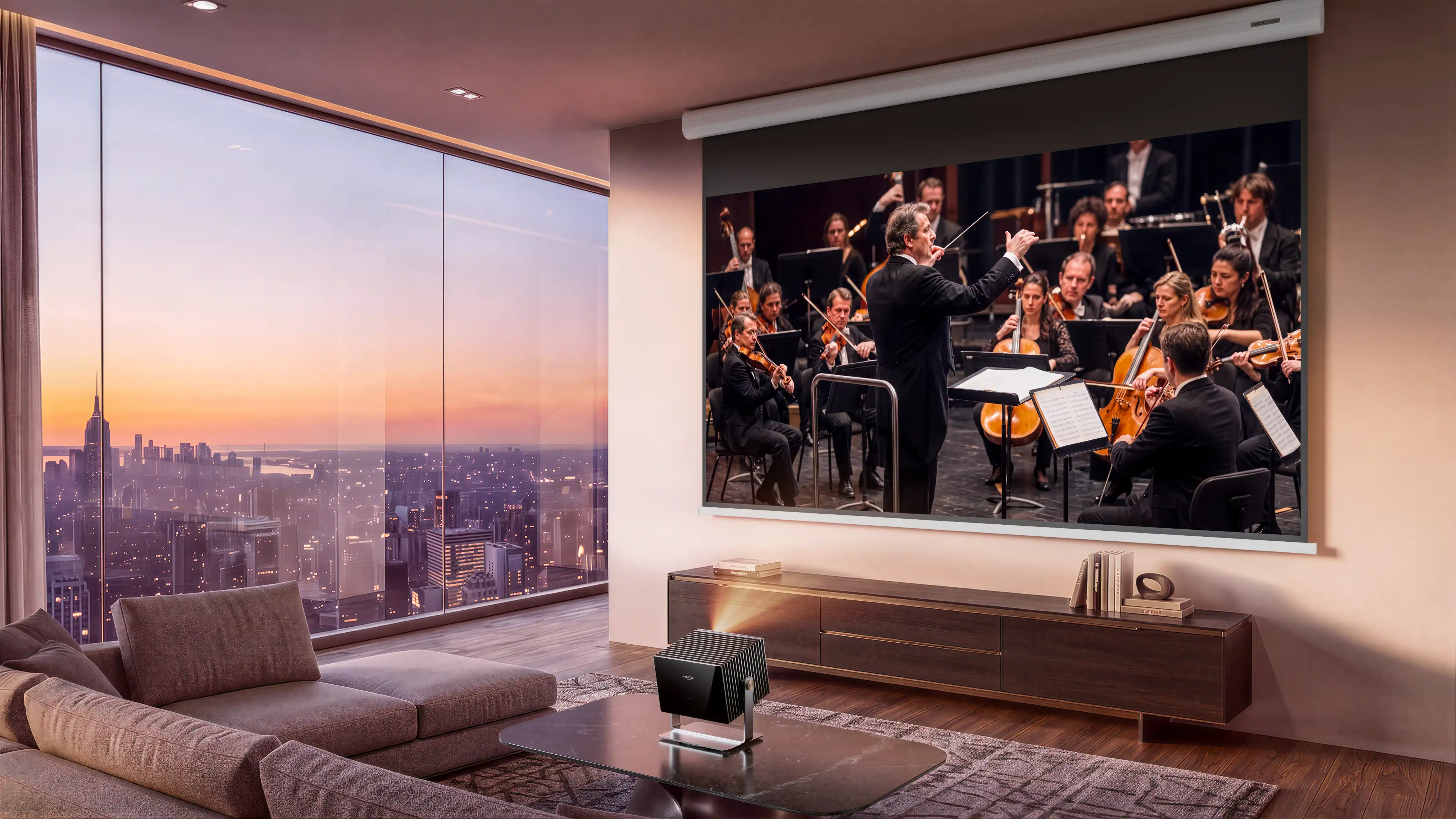
Few people have a perfectly blacked-out theater. Most of us watch with curtains partly drawn, a lamp on, or light reflecting off walls and ceilings. A gray screen reduces the effect of that diffuse ambient light, so the image washes out less. You still get solid contrast without waiting for total darkness, which makes it a good fit for living rooms, bedrooms, and dedicated home theaters alike.
4. Richer color with a cinema-like look
Gray screens trade some brightness gain for stronger color saturation and better shadow separation. The result looks closer to what you'd see on a commercial cinema screen. Animation, films, sports, and games gain visual weight, especially in dim or low-light settings.
Step 3: Match the Screen to Your Projector's Brightness
This is the step that many buyers skip.Because a 0.7-gain screen reflects somewhat less light than a 1.0-gain white screen, it works best with medium-to-high brightness projectors. The idea is simple: use your projector's brightness headroom to buy better blacks and contrast.
- Bright projector? A gray screen can take a picture from merely bright to layered, rich, and cinematic.
- Lower-brightness projector in a room you can fully darken? A white screen may still serve you well. A gray screen could leave the image looking dimmer than you'd like.
Step 4: White Screen vs. Gray Fiberglass Screen at a Glance
| Matte White | Gray Fiberglass (CineContrast) | |
|---|---|---|
| Material | PVC | Gray PVC surface with matte diffuse coating, woven fiberglass middle layer, PVC backing that blocks light pass-through |
| Gain | High (≈1.0) | Low (≈0.7) |
| Perceived brightness | ⭐⭐⭐⭐ (brighter) | ⭐⭐⭐ (slightly dimmer) |
| Contrast in lit rooms | ⭐⭐ (washes out noticeably) | ⭐⭐⭐⭐ (deeper blacks) |
| Black level: strong ambient light | ⭐ | ⭐⭐⭐ |
| Black level: controlled ambient light (daytime with sheer curtains, moderate indoor lighting) | ⭐⭐ | ⭐⭐⭐⭐ |
| Black level: dark room | ⭐⭐⭐⭐⭐ | ⭐⭐⭐⭐⭐ |
| Color character | Natural, standard | Cinema-style gray-screen look |
| Ambient light rejection | None | Stronger (resists wash-out) |
| Viewing feel |
Quick rule of thumb:
- Fully light-controlled room, or a modest-brightness projector → white screen
- Real-world room with some ambient light, plus a medium-to-high brightness projector → gray screen
Step 5: What's Inside a Quality Gray Screen
Not all gray screens are built the same. The CineContrast uses a three-layer composite construction:
- Gray PVC surface layer with a matte, diffuse-reflection coating. Its gray tone rejects ambient light better than white, reducing the haze caused by ceiling and wall reflections.
- Woven fiberglass middle layer with a warp-and-weft structure. The material stretches by ≤0.3%, so it stays flat and durable even through temperature swings and changing weather.
- PVC backing layer that blocks light from passing through the screen.
Why fiberglass matters: a screen that sags, ripples, or curls distorts the image. A stable fiberglass base keeps the surface flat for years, not just on day one.
Step 6: Why Choose a Motorized Drop-Down Design
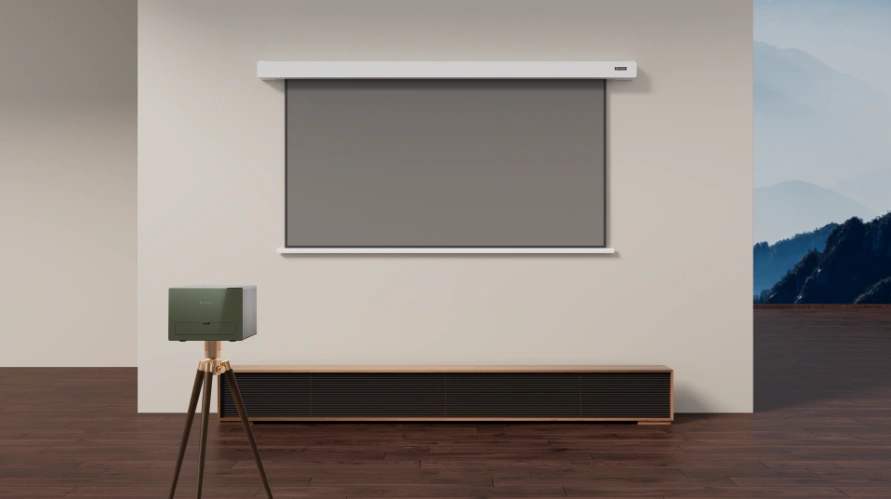
If you don't want a permanent screen on the wall, or you want your living room to look like a living room when the projector is off, a motorized drop-down is the practical option. Here's what the CineContrast offers:
- Fully automatic raise and lower. Control it with the remote or the wireless USB trigger. One press and it moves, with no manual pulling or storage hassle.
- Concealed storage. When it isn't in use, the screen rolls completely back into its housing, keeping out dust and dirt and keeping the room tidy.
- Stable, durable operation. An all-aluminum-alloy housing, a quality tubular motor, and limit protection are built to handle repeated cycles.
- A flat, tensioned surface. The screen stays taut and wrinkle-free throughout its travel, so the image stays consistent.
- Built-in safety protection. Overload and overheat protection make it safe for home and commercial use.
- A clean, matte-white design. The minimalist housing blends into most interiors, and it supports both wall-mount and ceiling-mount installation.
Who Should Buy the CineContrast Gray Screen?
It's a great fit if you:
- Own (or plan to buy) a medium-to-high brightness projector
- Watch movies, series, or games in a living room or bedroom where total darkness isn't always possible
- Care more about contrast, black levels, and a cinematic look than about maximum brightness
- Want a screen that disappears when you're not using it
You might prefer a white screen if you:
- Use a lower-brightness projector
- Always watch in a fully blacked-out room and want the brightest possible image
Final Thoughts
A great picture is a system: projector, room, and screen all play a part. If your projector has the brightness to spare, a gray screen is one of the most effective ways to turn that power into deeper blacks, richer color, and a more cinematic image, in rooms that look and feel like real homes.
The AWOL Valerion CineContrast Motorized Drop-Down Gray Fiberglass Screen pairs that picture-quality approach with a convenient, concealed, motorized design.
Member Benefits
Bring Your Cinema Experience Further
Subscribe and receive a $50 Welcome Benefit plus 4 pairs of 3D glasses, along with exclusive Valerion updates.

Points & Rewards

Member Pricing

Early Access

Priority Support
Discover More Insights