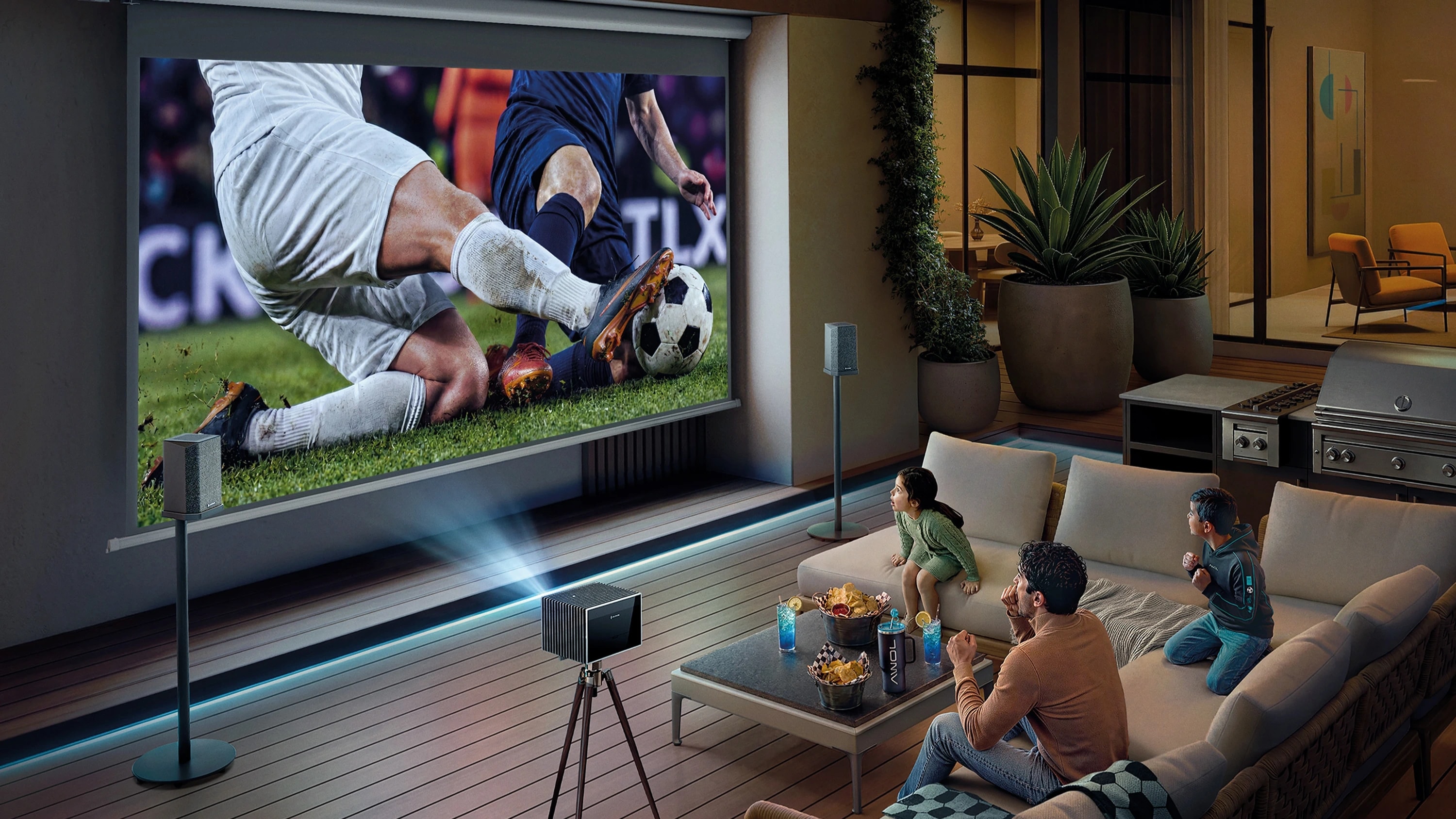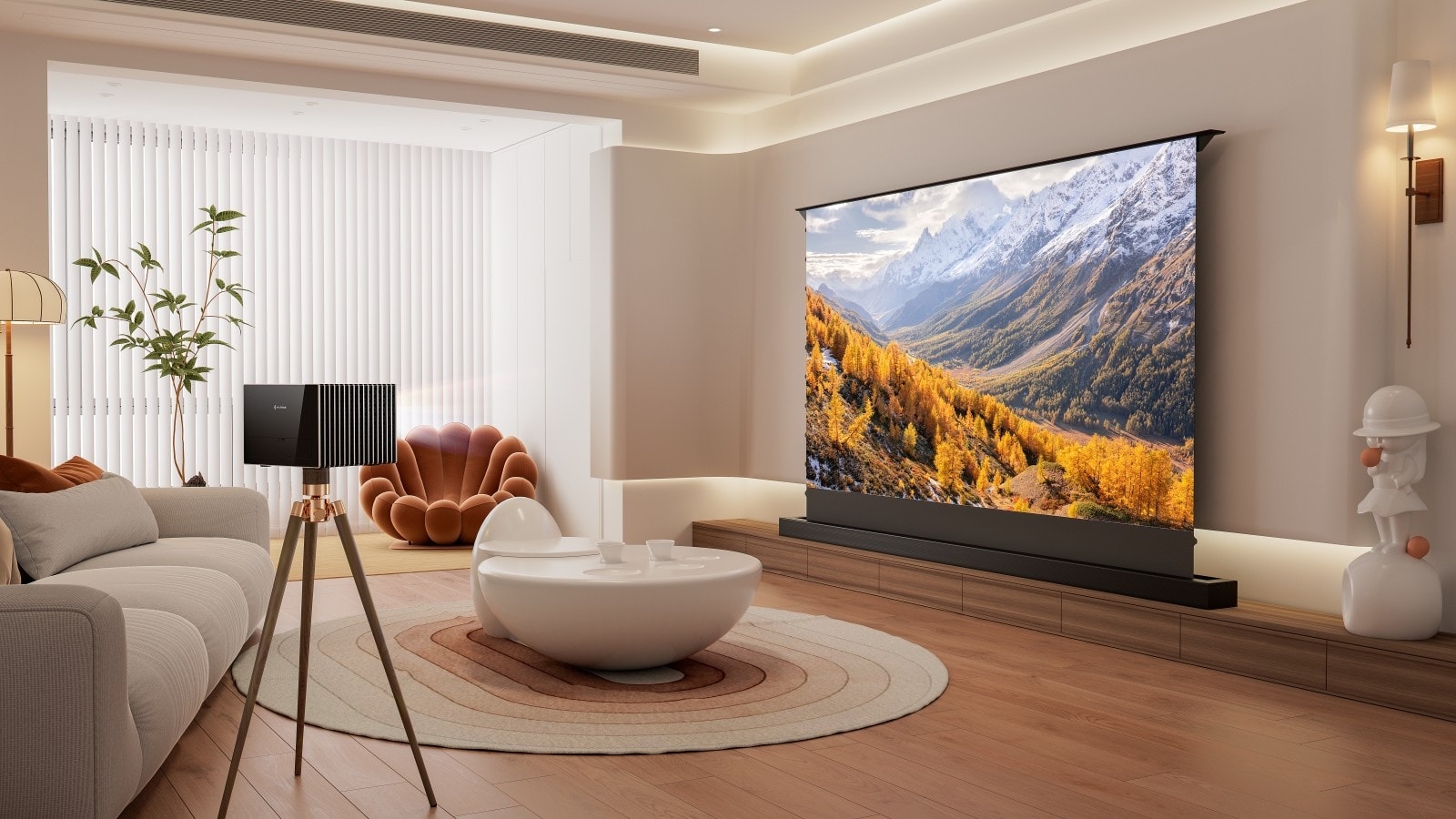
Is ambient daylight keeping you from your dream of having a 150-inch screen in the living room? Ambient light isn’t the real problem, your projector is. The best projectors work in bright rooms and don’t require you to live in the dark like traditional models. Thanks to advancements in bright-room projectors and optical screens, you can now enjoy daytime viewing without compromising. By understanding the right mix of brightness, laser technology, and screen pairings, you can find the best projector for bright rooms and transform any well-lit space into a cinematic theater.
The Bright Room Challenge: Why Traditional Projectors Look “Washed Out”
When using a projector during the day, sunlight scatters across the room and competes with the projected image. This is what causes the images to “wash out”: blacks turn to gray, contrast drops, and colors lose their punch, a problem that doesn’t occur in a dark environment. Now, living room home theater setups no longer require cave-like darkness, provided you invest in modern laser projection designed to overpower ambient light.
The Lumen Rule: Why High Brightness is Non-Negotiable
When shopping for a bright-room projector, brightness is the foundational metric that determines whether your image will pop or fade. However, not all brightness measurements are created equal, and knowing what to look for is crucial for well-lit environments.
ISO Lumens vs. ANSI Lumens: What is the Difference?
Both are standards used to measure projector brightness. ISO (International Organization for Standardization) uses a different, more stringent testing environment than ANSI (American National Standards Institute).
- ISO lumens are the standard for global brands.
- ANSI lumens are widely used in countries like the US, Japan, and Korea.
A projector rated in ANSI lumens may appear brighter on paper than one rated in ISO lumens due to differences in measurement methods. This doesn’t mean one is inherently better; it simply means the testing criteria differ. Both are reliable metrics to consider when choosing a projector with high light output.
Setting the Benchmark: Why 2500+ ISO Lumens is a Practical Starting Point
If you are buying a projector below 2,500 ISO lumens, it will likely struggle in daylight. But lumens only tell half the story. If a projector is exceptionally bright but relies on outdated light source technology, the colors will still look dull when competing with ambient light. This is where advanced laser architecture becomes the difference-maker.
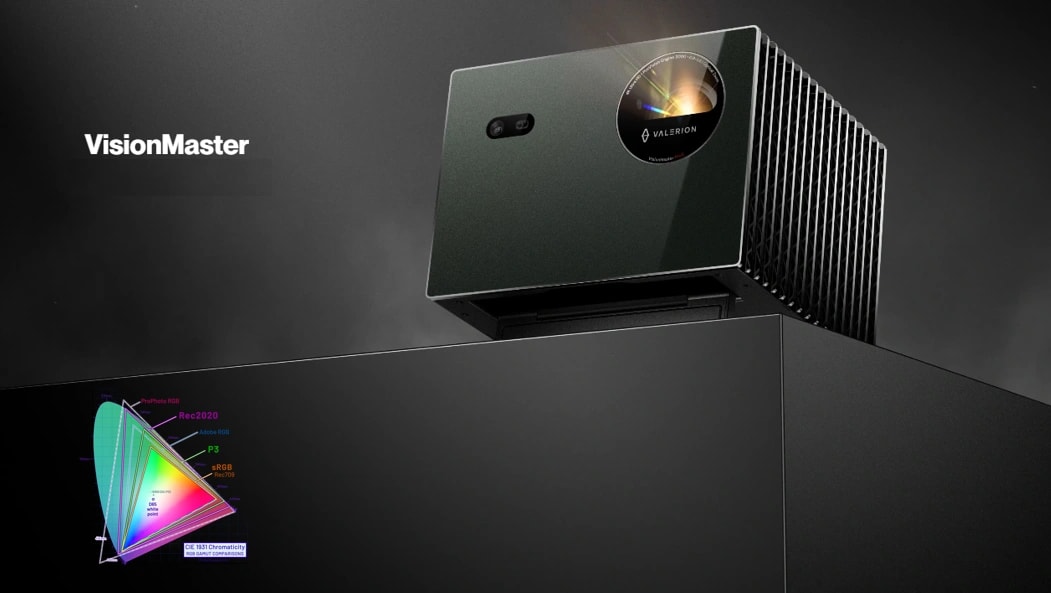
Modern projectors use RGB Triple-Laser technology (separate Red, Green, and Blue lasers) to project images rather than relying on lamps. Because triple-laser technology eliminates the need for a color wheel (unlike standard DLP projectors), it maximizes light efficiency and prevents the "Rainbow Effect." A great example is the VisionMaster Max, which outputs 3,500 ISO lumens. This excess headroom cuts through the daylight, keeping the image vivid even at massive 150-to-300-inch screen sizes.
What Affects a Projector's Brightness?
Whether you are watching Netflix with the curtains open, hosting a game day at noon, or gaming in ambient light, there are several factors to consider that will affect your daytime viewing.
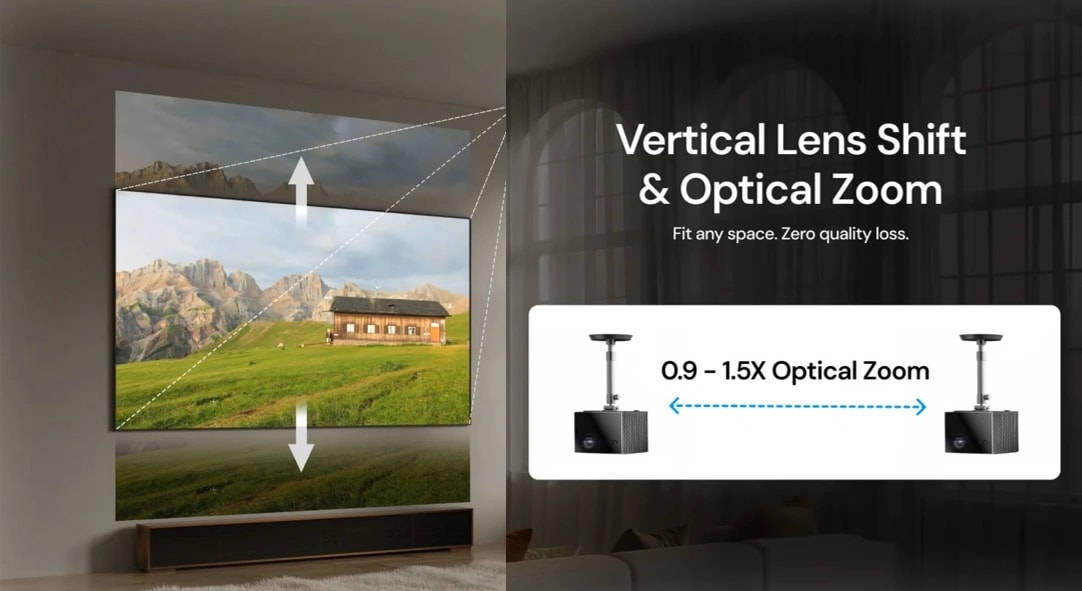
- Throw Distance & Room Layout: The room layout dictates which projector you should use. If the room is very large, consider a projector with a long throw. High-lumen, standard-throw projectors offer more flexibility in large living rooms without the strict screen-tension requirement whereas ultra-short-throw (UST) projectors require to be paired with an ALR screen in a larger room.
- Screen Size vs. Brightness Tradeoff: A bigger screen is more fun, but larger images appear dimmer even with the best projectors in bright rooms. Projecting the image onto a larger surface reduces the overall light density. In contrast, a smaller screen size ensures that light is concentrated onto a tighter area, increasing perceived brightness.
- Contrast vs. Brightness Balance: A high lumen output alone isn’t enough. Contrast gives the image depth, but focusing solely on contrast or brightness can make the picture look unnatural. For an image that is both bright and realistic, consider a projector with REC.2020 or a similar wide color gamut.
The “Secret Sauce” for Daytime Viewing: Pairing Your Projector with an ALR Screen
Even the brightest room projector cannot produce a great image when projected onto a standard white wall during the day. To truly combat ambient light, the projection surface must actively work in tandem with your hardware.
Benefits of ALR Screen
Ambient Light Rejecting (ALR) screens feature microscopic structures on their surfaces. They are engineered to reflect light coming from the projector directly to the viewer while deflecting or absorbing light coming from windows and ceiling fixtures. For example, the Valerion ALR screen can reject up to 85% of ambient light while making the projected image appear brighter. Investing in these screens significantly benefits you by enhancing contrast and preserving or even improving the projector’s perceived brightness.
Downsides of ALR Screens
ALR screens usually cost more than standard white screens. However, despite the higher price tag, they don’t have 300-inch screen size. Because of the microstructured engineering used on the surface, these screens require special care when cleaning. Applying too much pressure could permanently damage the screen material.
Key Features to Look for in a Bright Room Projector
When choosing the best projector for bright rooms, specs must go beyond just the light source. By ensuring your projector has these advanced cinematic and smart features, you can be assured it is future-proofed and will deliver a true Hollywood experience.
- 4K Resolution and Pixel-Perfect Clarity: 4K is becoming the new standard, as most streaming providers now offer 4K content. When projecting onto a larger screen, pixel density matters immensely. Higher pixel density prevents the image from looking soft or lacking contrast in daylight. Check if your projector supports native 4K, as projector pixel density is determined by total resolution, unlike TVs which rely heavily on PPI.
- Advanced HDR10+ and Dolby Vision Support: These formats help your projector deliver better images by adjusting contrast frame by frame, rather than applying a fixed contrast ratio like standard HDR. This ensures you don’t lose critical highlight details in well-lit rooms.
- Smart “Brightness Enhancer” Modes: Adaptive settings adjust the projector’s output using built-in sensors without requiring manual input. This is a great feature that makes your projector truly plug-and-play. Brightness Enhancer modes dynamically optimize the output based on the room's lighting conditions, giving users the perfect picture whether it’s noon or midnight.
FAQs About Daytime Projectors
Can my projector replace a TV?
Yes. If your projector is bright enough and paired with an ALR screen, it can absolutely be used during the day, ensuring you see accurate and vibrant visuals.
Do I need blackout curtains for a living room?
No, provided your projector outputs more than 2,500 ISO lumens and you are using an ALR screen instead of a standard white screen or wall.
ISO Lumens vs. ANSI Lumens: Which is more accurate?
Both are considered standardized and rigorous, providing a highly accurate reflection of real-world brightness. ISO is a globally recognized, stricter testing standard than ANSI. That ensures brightness doesn't come at the expense of color accuracy.
What is the benefit of Dolby Vision on a bright room projector?
Dolby Vision optimizes the picture frame by frame, ensuring maximum detail in both the brightest highlights and the darkest shadows. This dynamic adjustment is especially beneficial when fighting fluctuating ambient light.
Where should I place my projector screen?
Always place your screen away from direct windows and other harsh light sources. Keep the screen perpendicular to the windows to get the best visual results.
Conclusion
To achieve a cinematic experience during the day, invest in a bright room projector and an ALR screen to enhance visuals while rejecting ambient light reflections. The best projector for a bright room must have an output of more than 2,500 ISO lumens; anything less will likely struggle during the day. However, prioritizing only brightness could lead to washed-out images. For a true cinematic experience, ensure the projector also has excellent contrast and color accuracy. Ready to stop compromising on daylight viewing? Explore the Valerion bright-room projector lineup today and discover how easy it is to bring a true cinematic experience to your sunlit living space.