Big Picture, Flat Sound? Why ThunderBeat Belongs in Your Home Theater
August 28, 2026
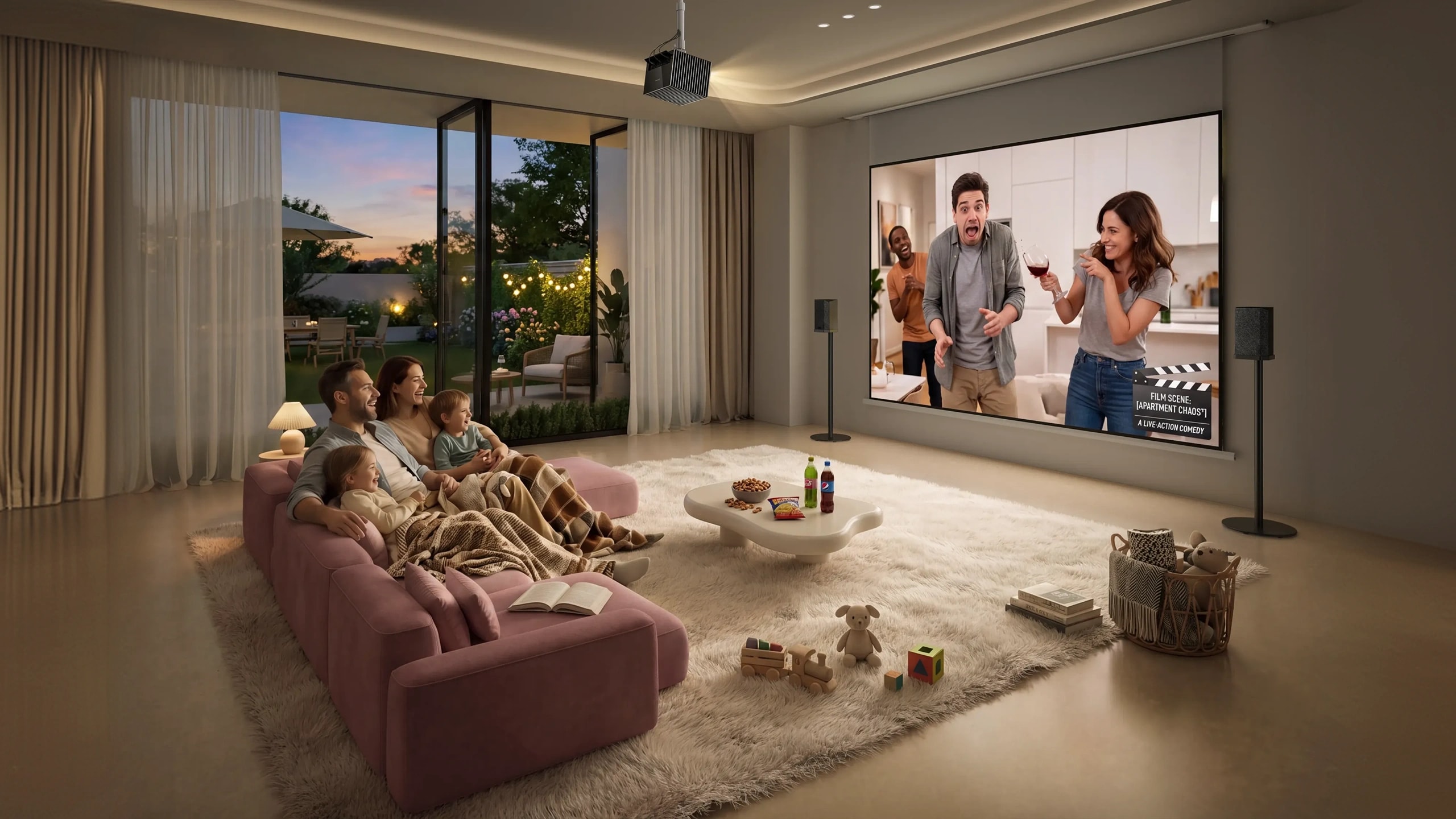
You spent weeks comparing lumens, contrast ratios, and screen sizes before landing on a projector that turns your living room into a real cinema. Then movie night arrives, the lights go down, and the dialogue sounds like it's coming through a tin can. Explosions have no punch. That car chase you were so excited to watch in 4K ends up sounding thin and flat.
It's one of the most common — and most avoidable — mistakes in home theater setup: nailing the picture and forgetting the sound. Not because people don't want great audio, but because building a proper surround system has traditionally meant an AV receiver, a tangle of speaker wire, and an afternoon spent fishing cable through walls and ceilings. If your projector sits on a shelf at the back of the room, that last part alone is often reason enough to give up and settle for whatever speakers came built into the TV.
That's the exact problem AWOL Valerion built ThunderBeat to solve.
A Surround System Designed Around How Projectors Actually Get Used
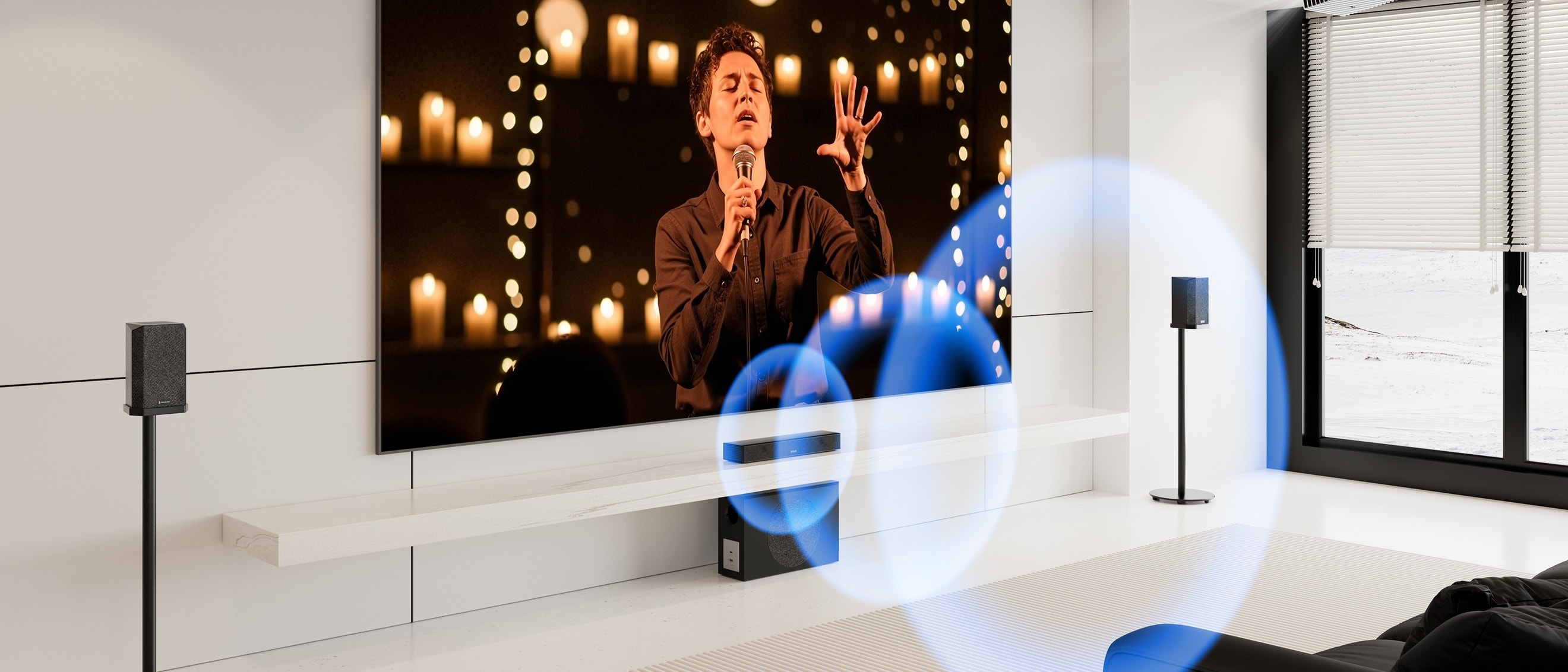
ThunderBeat is AWOL Valerion's own Dolby Atmos and DTS:X surround sound system, and the core idea behind it is simple: no speaker cables, anywhere. A small wireless transmitter connects to your projector or TV over HDMI eARC, and every satellite speaker and the subwoofer communicate with it wirelessly from there. Each unit only needs to be near a power outlet — nothing more.
For a projector living on a back shelf, or aimed at a motorized screen with nothing but blank wall in front of it, that matters more than it might sound like on paper. There's no center speaker awkwardly parked under the screen, no cable taped along the baseboards, and no need to open up drywall just to get sound to the rear surrounds.
What You're Actually Getting
A few things worth knowing if you're weighing this against a soundbar or a wired setup:
- Genuinely wireless, not Bluetooth-limited. The satellites and subwoofer run on a dedicated wireless link built for multichannel Dolby Atmos and DTS:X, rather than the compressed stereo signal you'd get streaming over Bluetooth.
- Sub-30ms latency. Low enough that dialogue stays in sync with lip movement and fast-paced games don't feel delayed — the point where a lot of wireless audio systems usually struggle.
- Real height channels. The ".2" in ThunderBeat's 4.1.2 and 5.1.2 naming refers to dedicated Atmos height channels, so overhead effects — rain, a helicopter passing over — actually come from above you.
- Setup measured in minutes. The speakers automatically pair with the transmitter out of the box, taking roughly 15 minutes from unboxing to a fully working system.
- Room to grow. Start with the 4.1.2 bundle — two front speakers, two rear surrounds, and a subwoofer — and add the wireless Center Channel Speaker later to expand into a full 5.1.2 setup, instead of committing to everything on day one.
4.1.2 or 5.1.2? It Comes Down to Where You Sit
If you're usually the only one on the couch, or you and a partner tend to sit dead-center, the 4.1.2 configuration lets the front left and right speakers carry dialogue convincingly on their own, while keeping the space under your screen completely clear. It's the cleaner-looking setup, and for a single dedicated seat, it holds up well.
If movie night in your house means a full couch, a couple of extra chairs, and someone always ending up off to the side, the dedicated Center Channel Speaker in the 5.1.2 configuration is worth having. It anchors dialogue to the screen no matter where people are sitting, which matters most in dense, dialogue-heavy scenes or anything competing with a lot of background noise.
Because the system is modular, this isn't a decision you need to get perfectly right on day one. Plenty of ThunderBeat owners start with the 4.1.2 bundle and add the center speaker later, once they've actually learned how the room gets used.
Built With Projector Owners in Mind
ThunderBeat is engineered specifically around AWOL Valerion's projector lineup — HDMI eARC connectivity plus USB-C power pass-through keep the whole setup down to a single cable running to the transmitter. It also accepts audio over Bluetooth and USB, so it doubles as a wireless speaker for music or a game console outside of movie night. If you're planning to pair it with a display outside the AWOL Valerion lineup, it's worth confirming compatibility for your specific projector or TV first, since the integration is tightest with AWOL Valerion's own hardware.
Independent reviewers have generally landed in a similar place on the sound itself: a noticeable, bass-forward step up from built-in TV speakers or a basic soundbar, with the wireless convenience being the real headline rather than reference-grade audiophile precision. For a system meant to disappear into the room instead of dominating it, that's a fair trade.
Who Should Actually Consider It
- Anyone with a projector who's been putting off surround sound because of the wiring involved
- Gamers who want spatial audio without introducing noticeable lag
- People setting up a home theater for the first time who'd rather skip the AV receiver learning curve entirely
- Households torn between a clean, minimalist look (4.1.2) and dialogue clarity for a crowd (5.1.2) — since ThunderBeat lets you choose either, or upgrade later
The Bottom Line
A great picture only gets you halfway to a real home theater. If your projector or TV has been carrying the show alone while the audio quietly disappoints, AWOL Valerion ThunderBeat is built to close that gap without asking you to run a single speaker cable.
Discover More Insights